Document Gallery
Issues of Come Out!, Gay Flames, Manifestos, Flyers, and more. If you’re looking for documents from the history of GLF this is where you’ll find them. This is an ongoing project to scan and upload materials. If you don’t find what you’re looking for, come back later. And if you have any documents you think should be here, please scan them and send them to us.
Come Out! newspapers by GLF
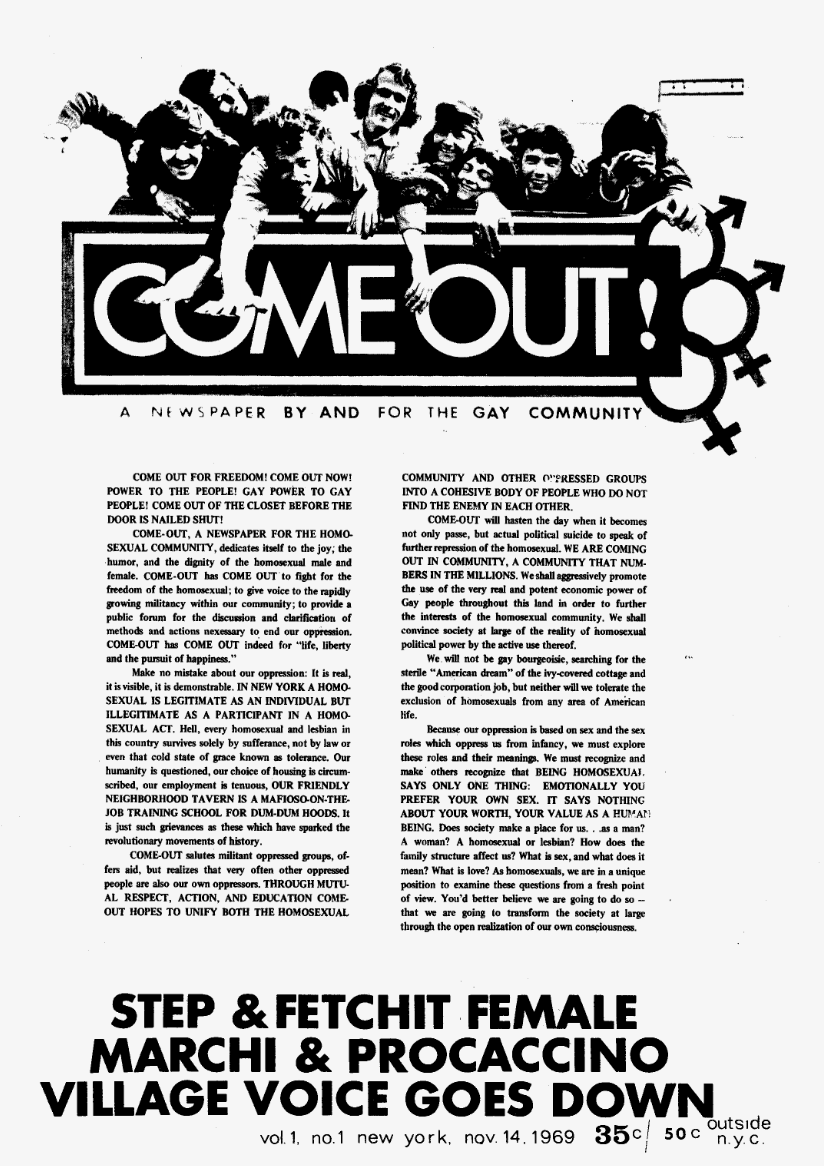
NOV 14, 1969: The first issue of the GLF newspaper includes: "To the Gay Liberation Front” by Ron Ballard and Bob Fontanella, "Stepin Fetchit Woman" by Martha Shelley, "BITCH: Summer’s Not Forever" by "butch drag" lesbian Marty Stephen, Village Voice Protest, and more.
JAN 10, 1970: This issue announced "Christopher Street Liberation Day, Saturday, June 29, 1970." Includes: "More Radical Than Thou" by Martha Shelley, “Cuba: The Sexual Revolution, a Beginning” photo essay by Ellen Bedoz, "Word Thoughts" by Jim Fouratt, "GLF News" by Lois Hart, and more.
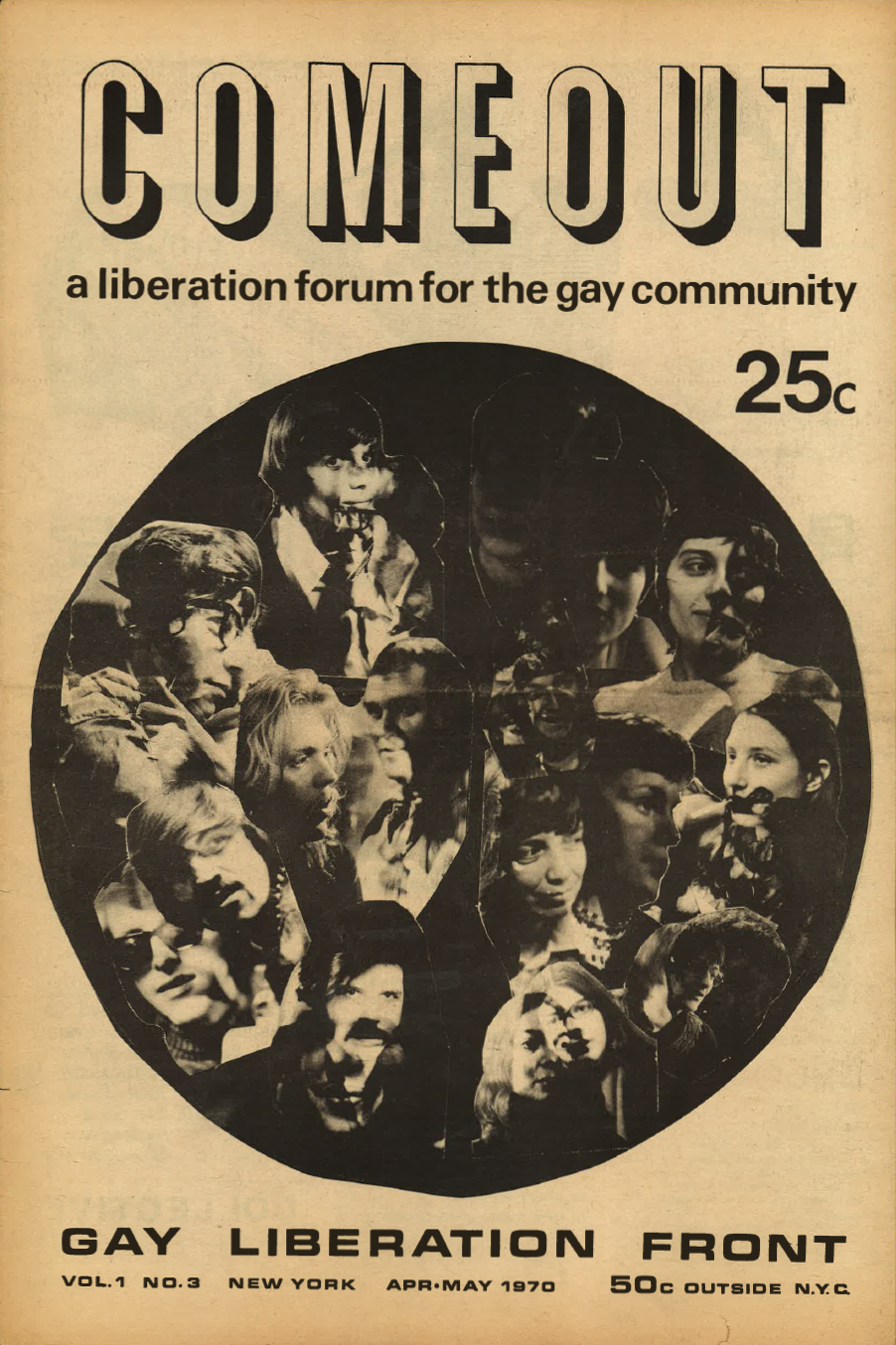
APR-MAY 1970: This issue reported the violent death of Diego Viñales, in “Gays Protest Police Raid on Bar After Young Man is Impaled on Fence.” Other pieces include: “Right On!!" by Bob Kohler, and “The Young Lords Go to Church” by Martha Shelley, "Homosexuals In The Movement" by Pat Maxwell, and more.
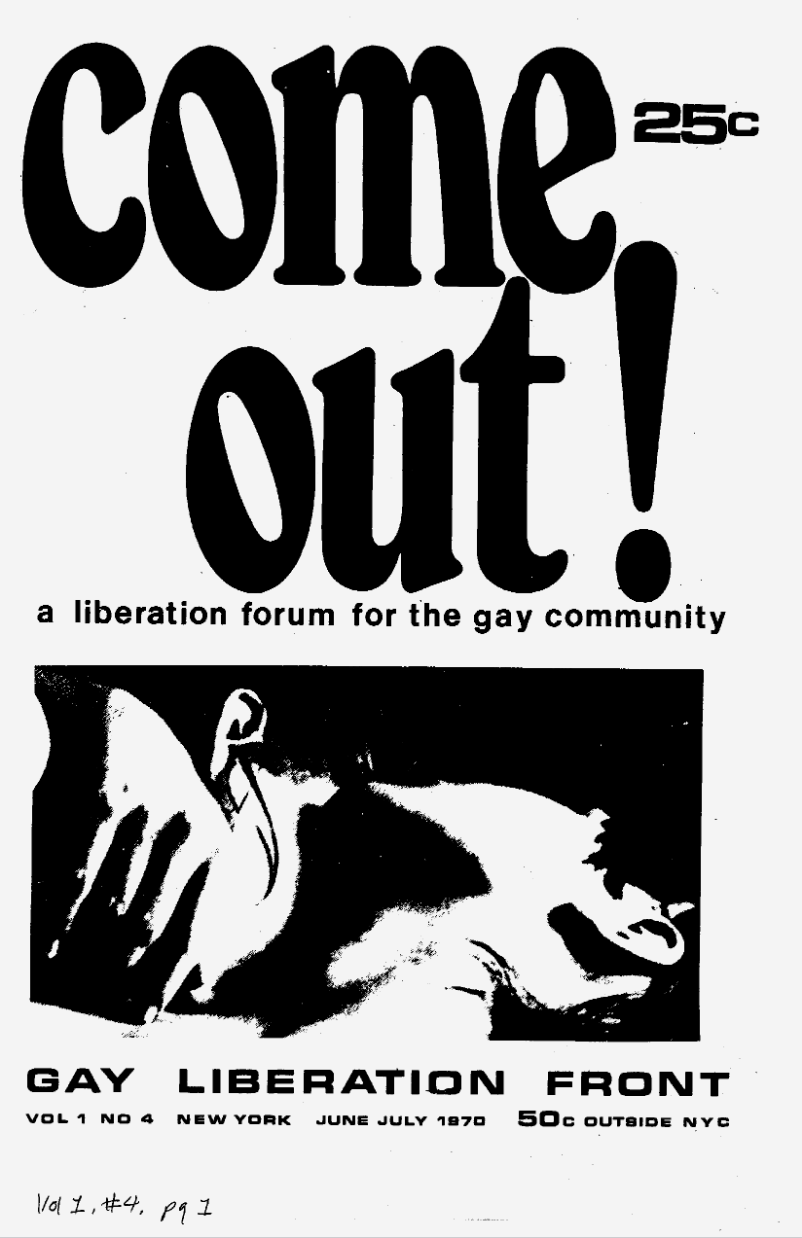
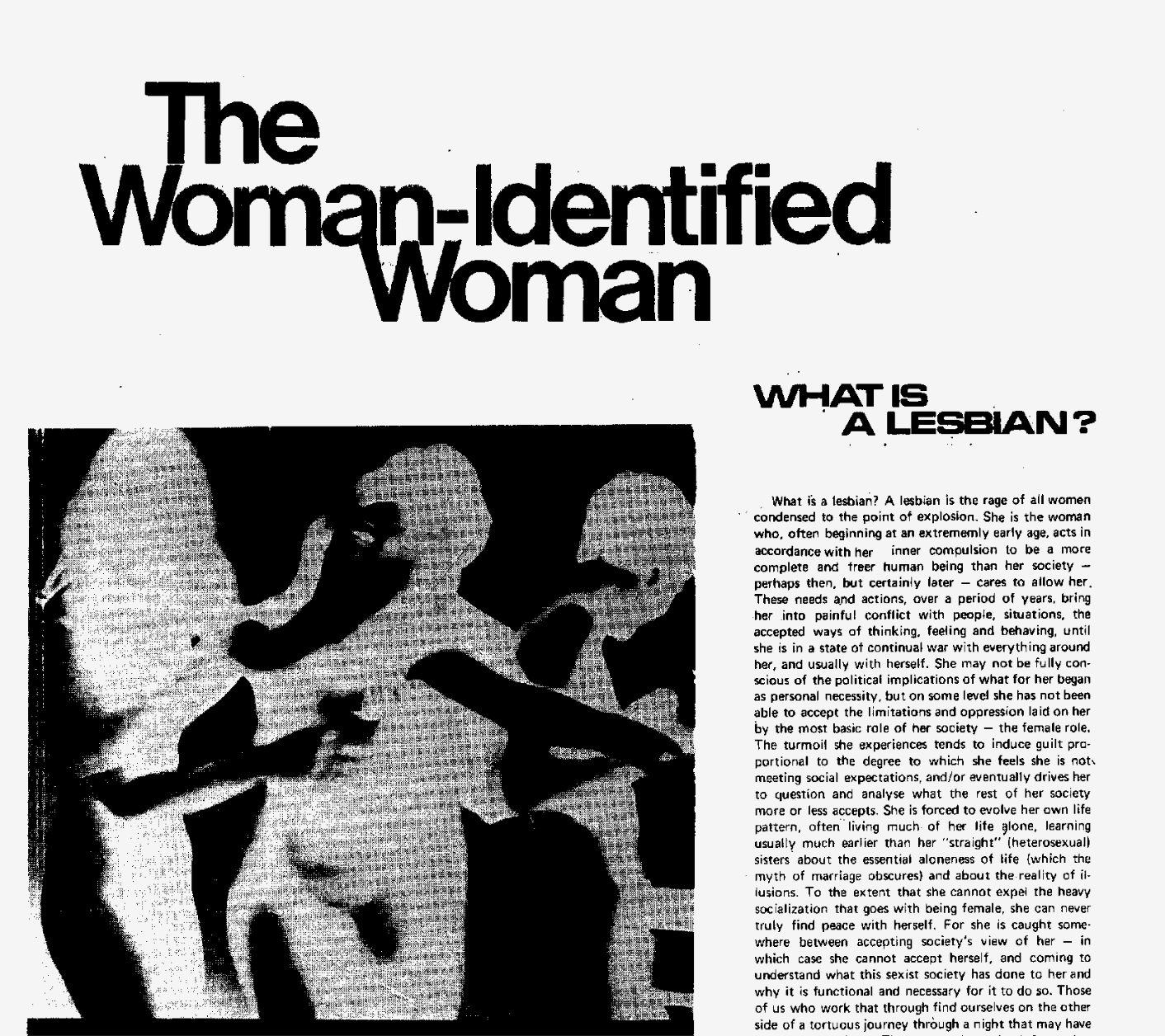
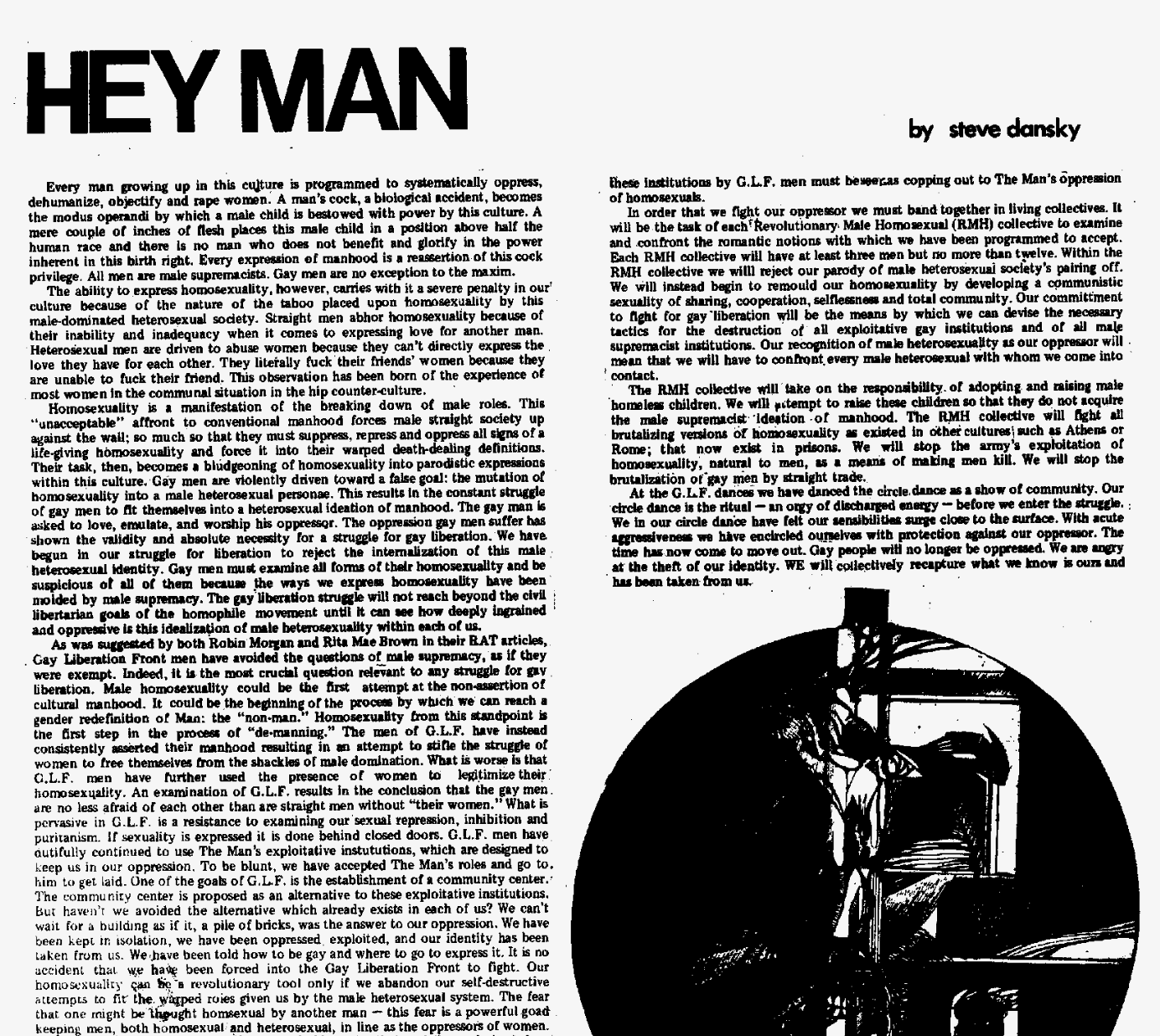
JUNE-JULY 1970: This issue includes two manifestos: “Hey Man” by Steve Dansky, for men opposing sexism of all kinds, and “The Woman-Identified Woman” by Radicalesbians. Also: “The Transvestite in America” by Laura McAlister, a piece by Ellen Broidy on the Kent State massacre, and more.
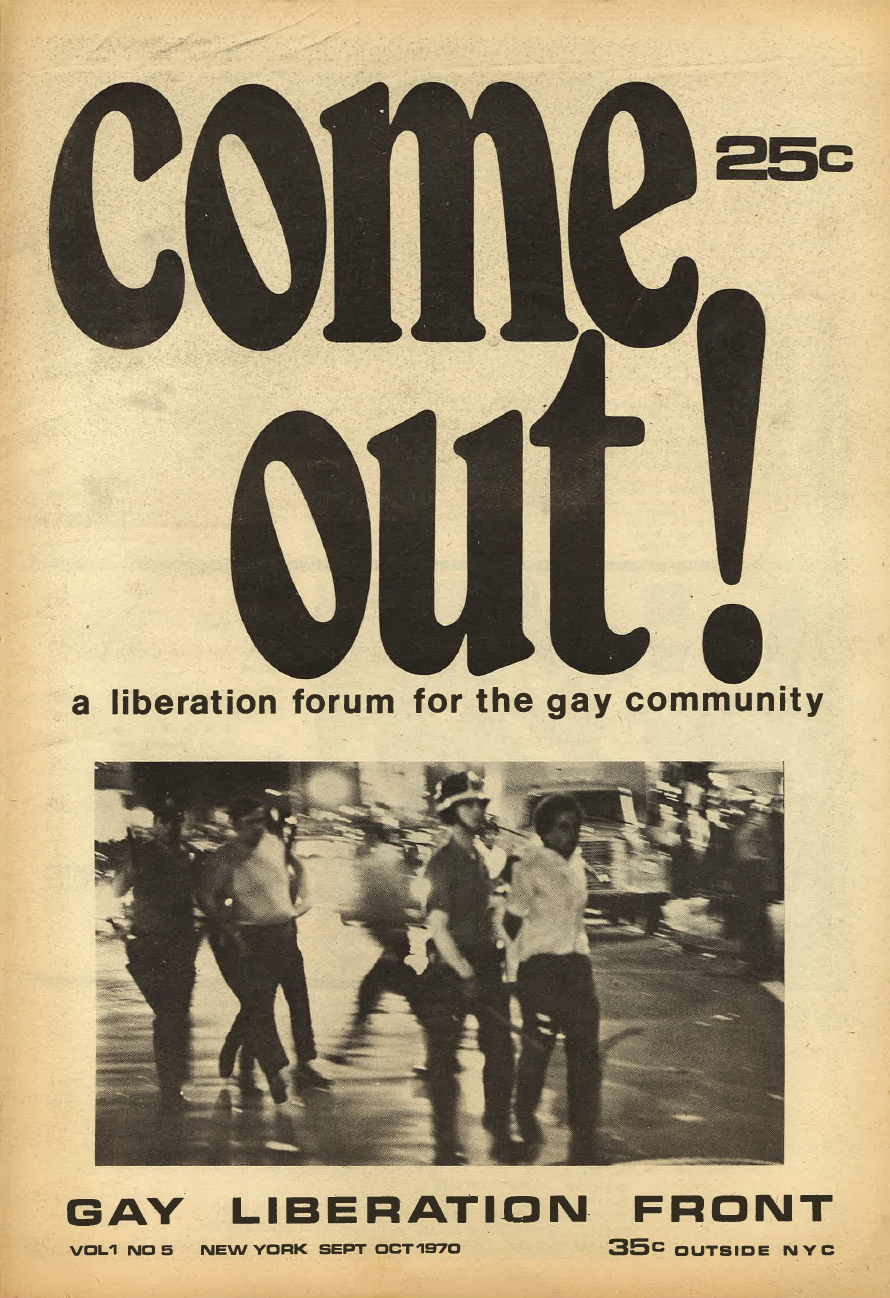
SEPT-OCT 1970: This issue covers the first Christopher Street Liberation Day march with personal accounts and photos. It includes a statement from the newly formed Third World Gay Revolution in English and Spanish, updates on Black Panther Party organizing, and more
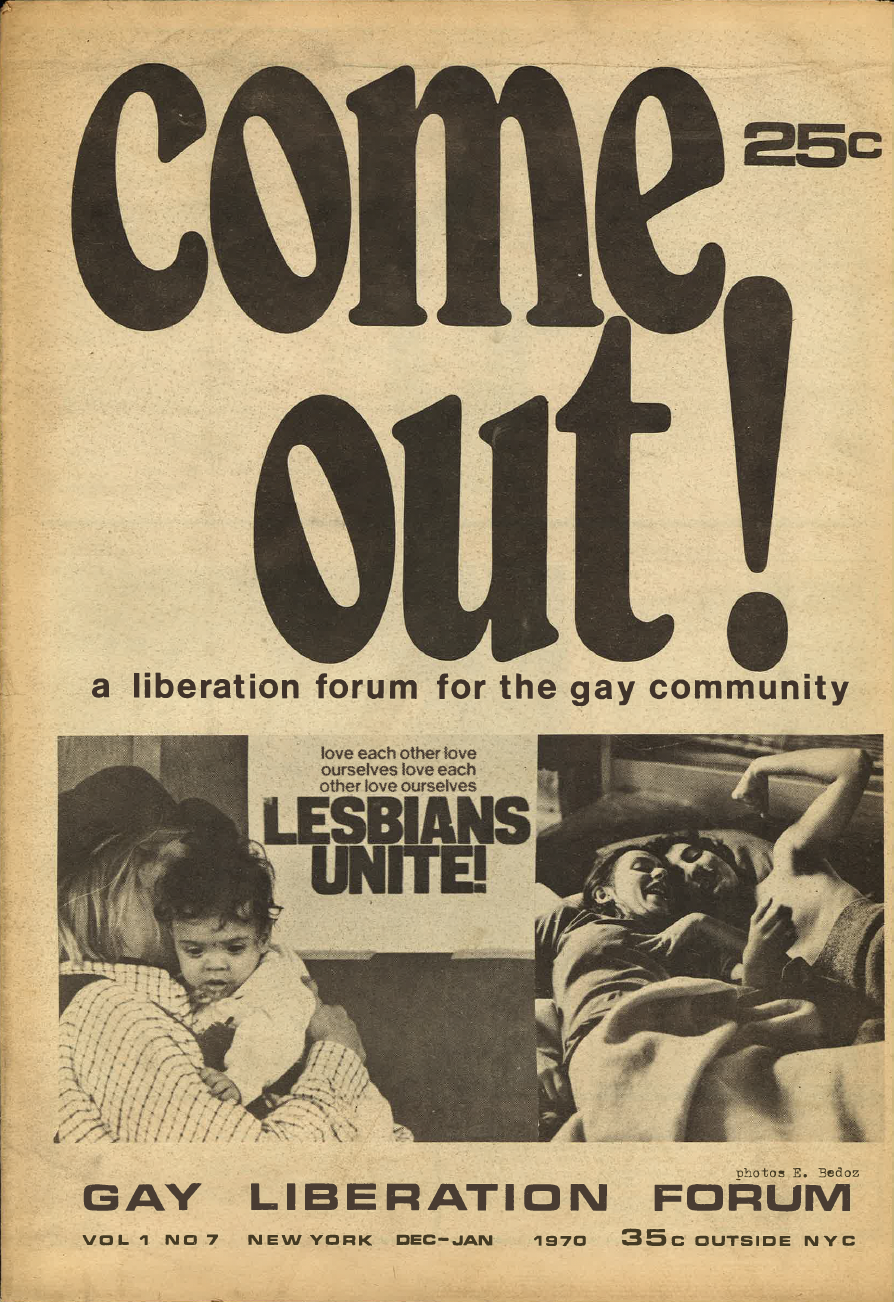
DEC 1970–JAN 1971: This issue includes: a list of Gay & Women’s periodicals and organizations; announcements from groups Gay Youth, Red Butterfly, GLF Women, Radicalesbians; an emerging Community Center in the West Village, and more.
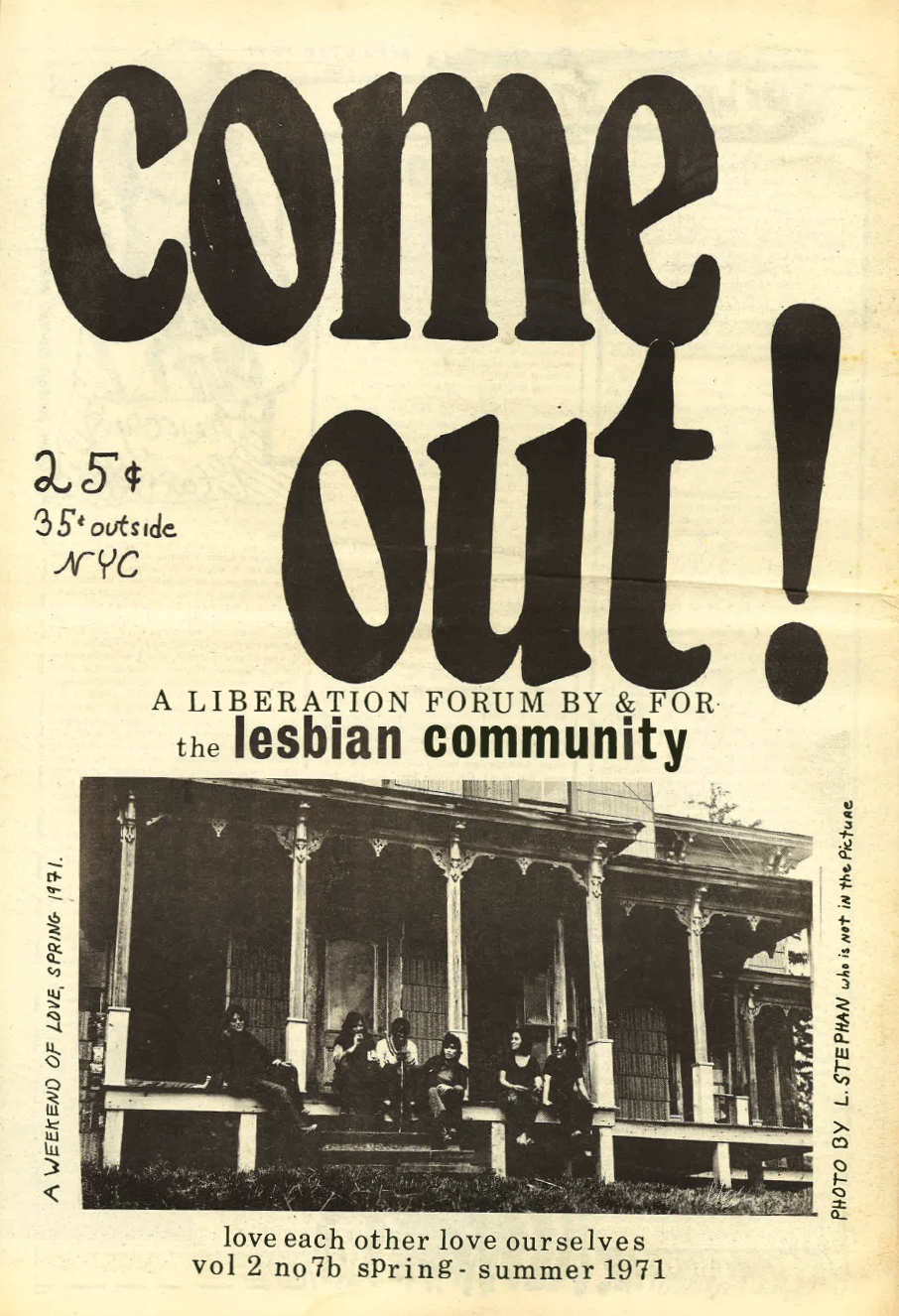
SPRING–SUMMER 1971: This issue includes an event calendar for “Gay Pride Week” June 18–27, 1971. It has a front and back cover – one gay, one lesbian. It includes many coming out stories, boycott and support of local businesses, a crossword puzzle, and more.
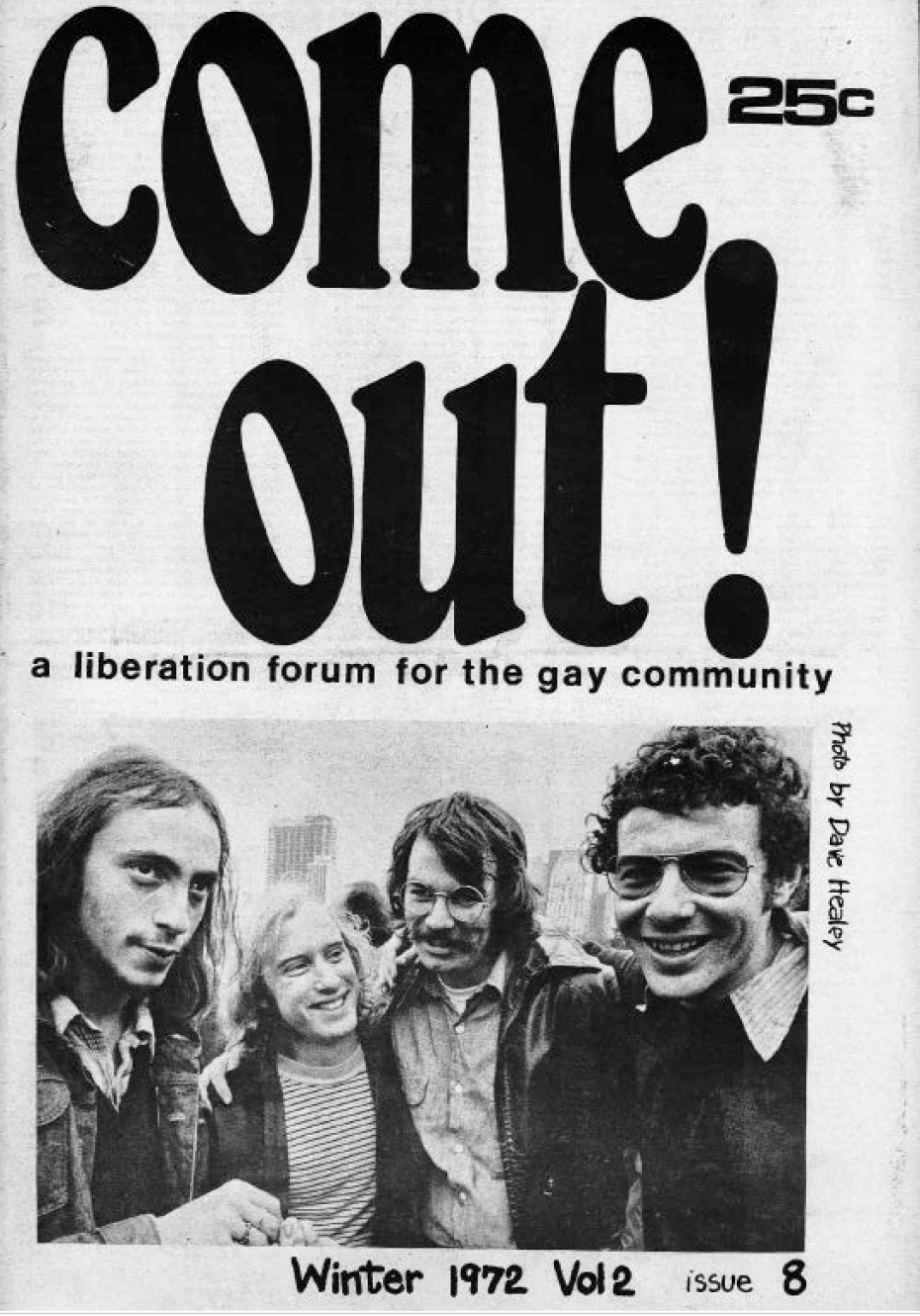
WINTER 1972: This issue is the last in the Come Out! series. It includes many thoughts on the gay movement, book reviews, and coverage of new community spaces such as Liberation House Collective and an emerging Gay Switchboard, and more.
Gay Flames pamphlets by GLF
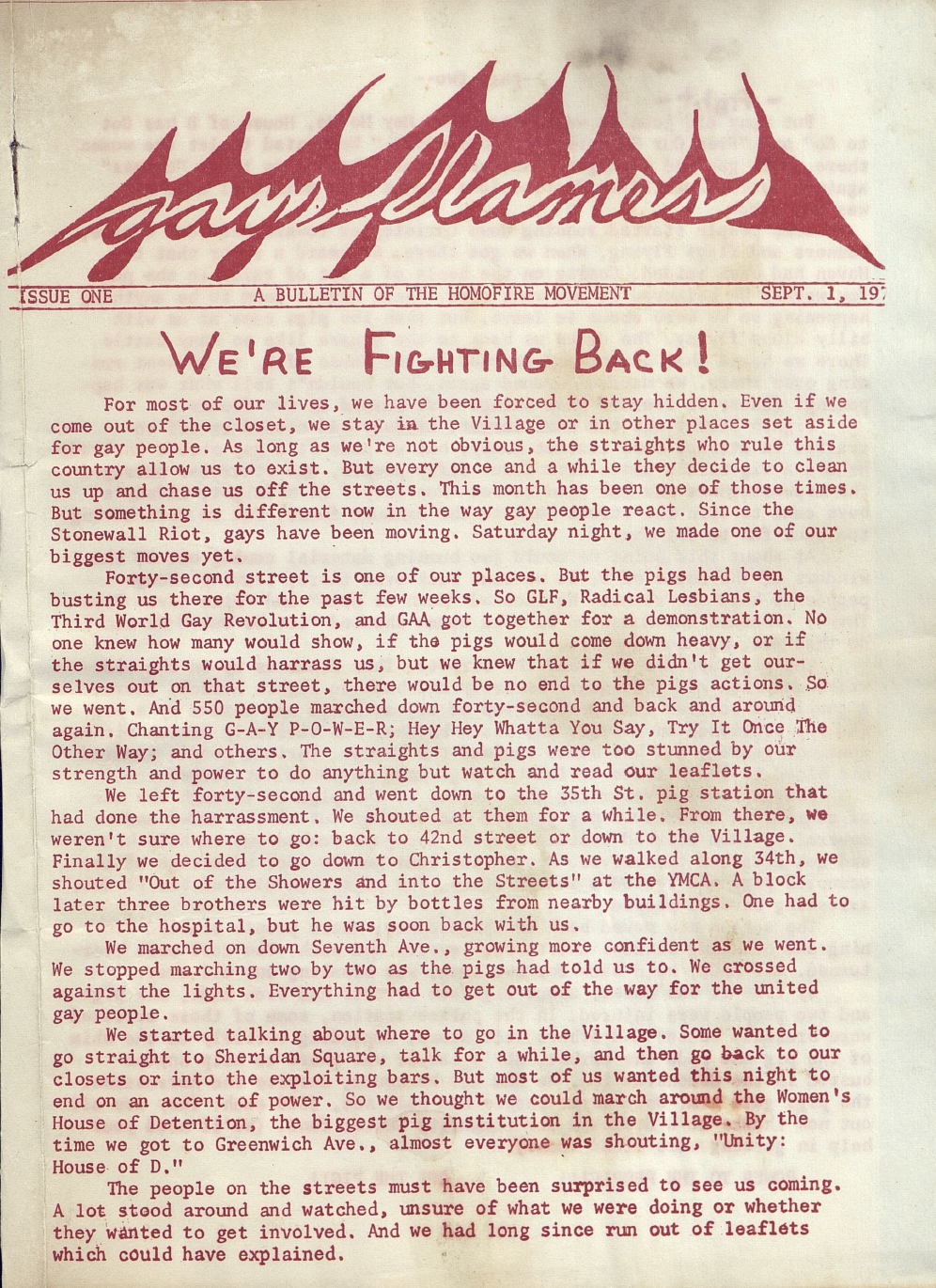
SEPT. 1, 1970: “We’re Fighting Back!” gives an eyewitness account of an NYC demonstration with landmark streets and locations, interactions with police, chants shouted, and more. NYU Weinstein hall demonstrations. Pamphlet’s mission.
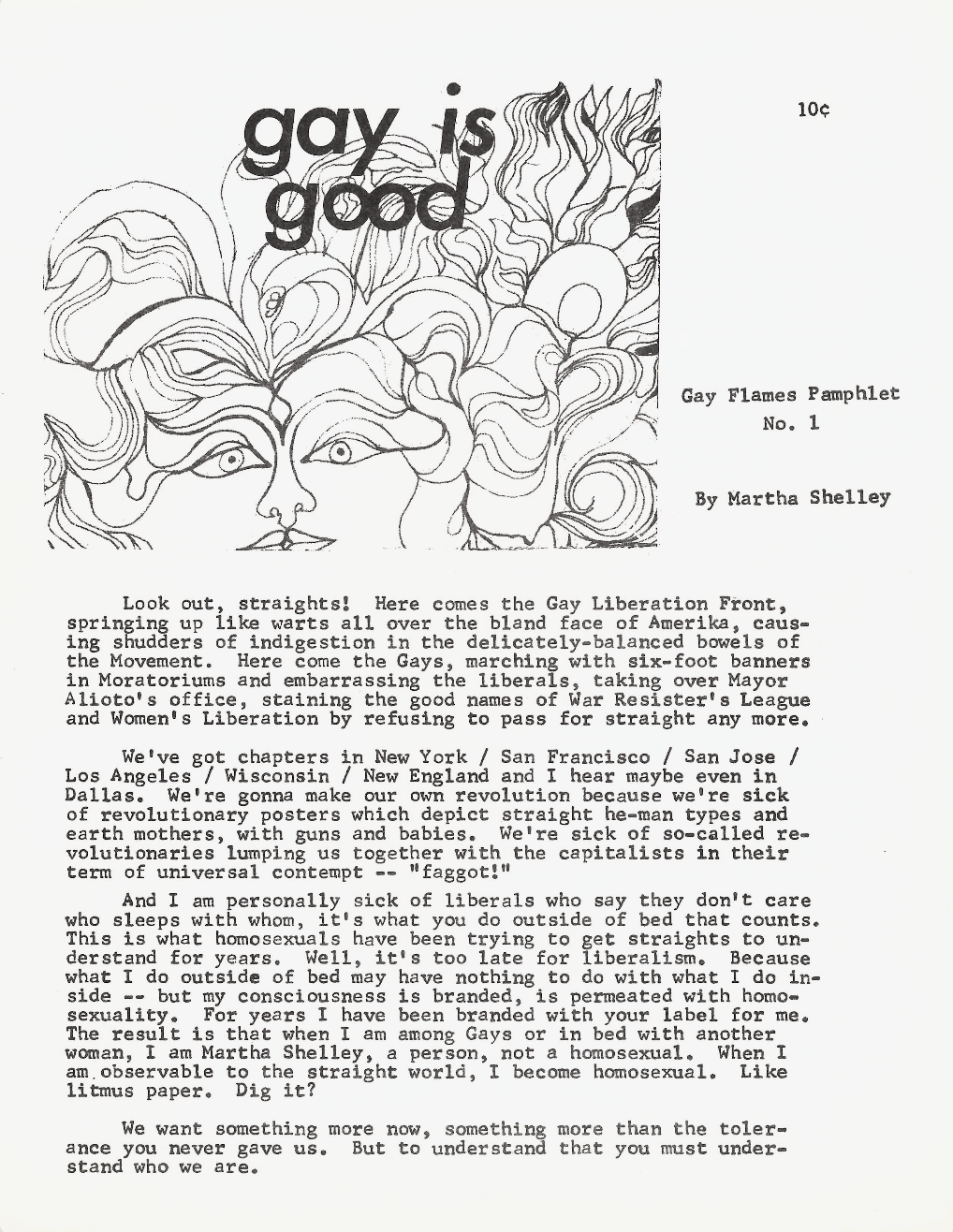
SEPT 1970: “Gay is Good.” This issue of the Gay Flames pamphlet includes an article titled “Gay is Good” by GLF member Martha Shelley, which is reprinted from Rat. It is numbered #1, but is considered an alternate to issue #1.
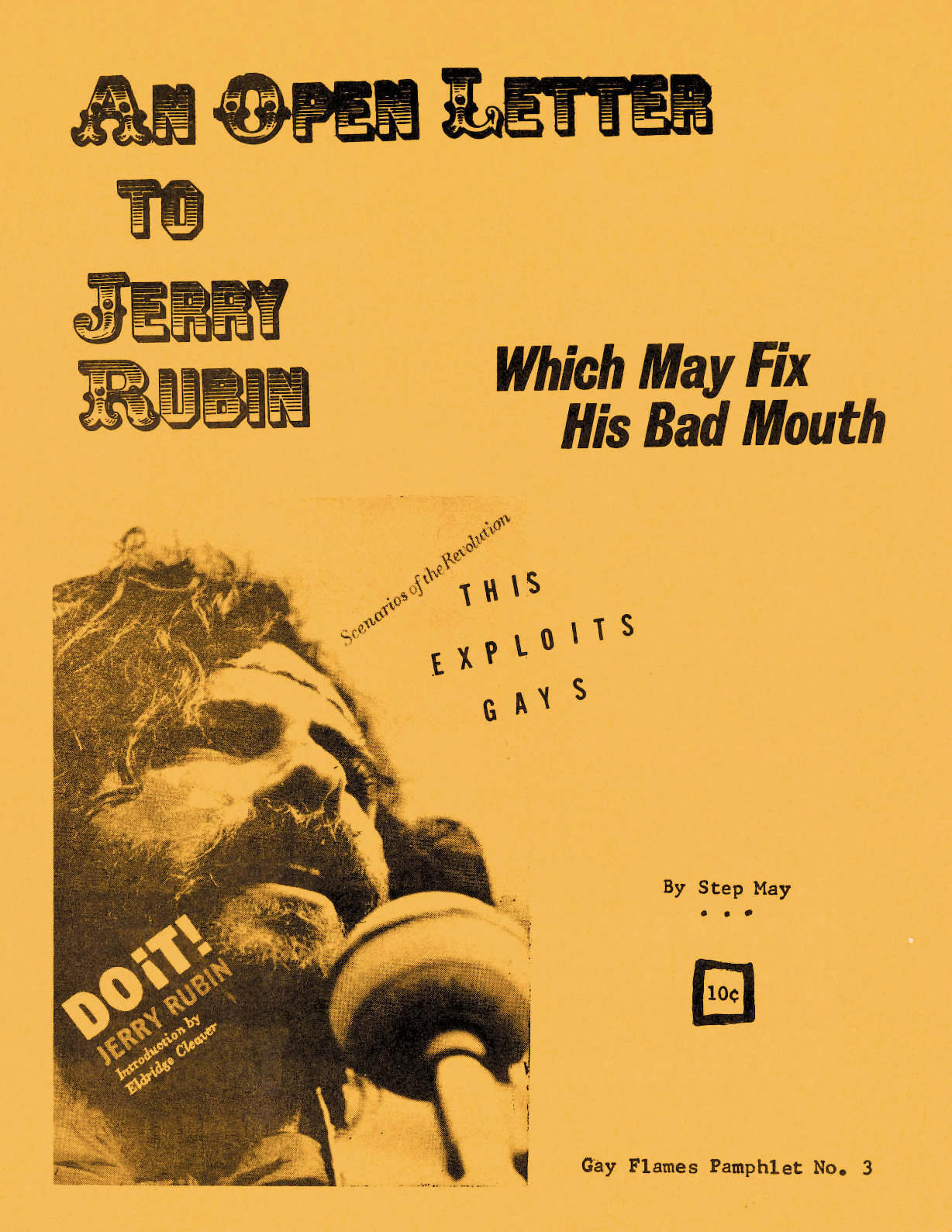
SEPT. 1970: “An Open Letter to Jerry Rubin Which May Fix His Bad Mouth.” This issue of the Gay Flames pamphlet includes a piece by Step May of Chicago Gay Liberation, addressing Jerry Rubin for his anti-gay, hetero-chauvinist book, “DO IT!”
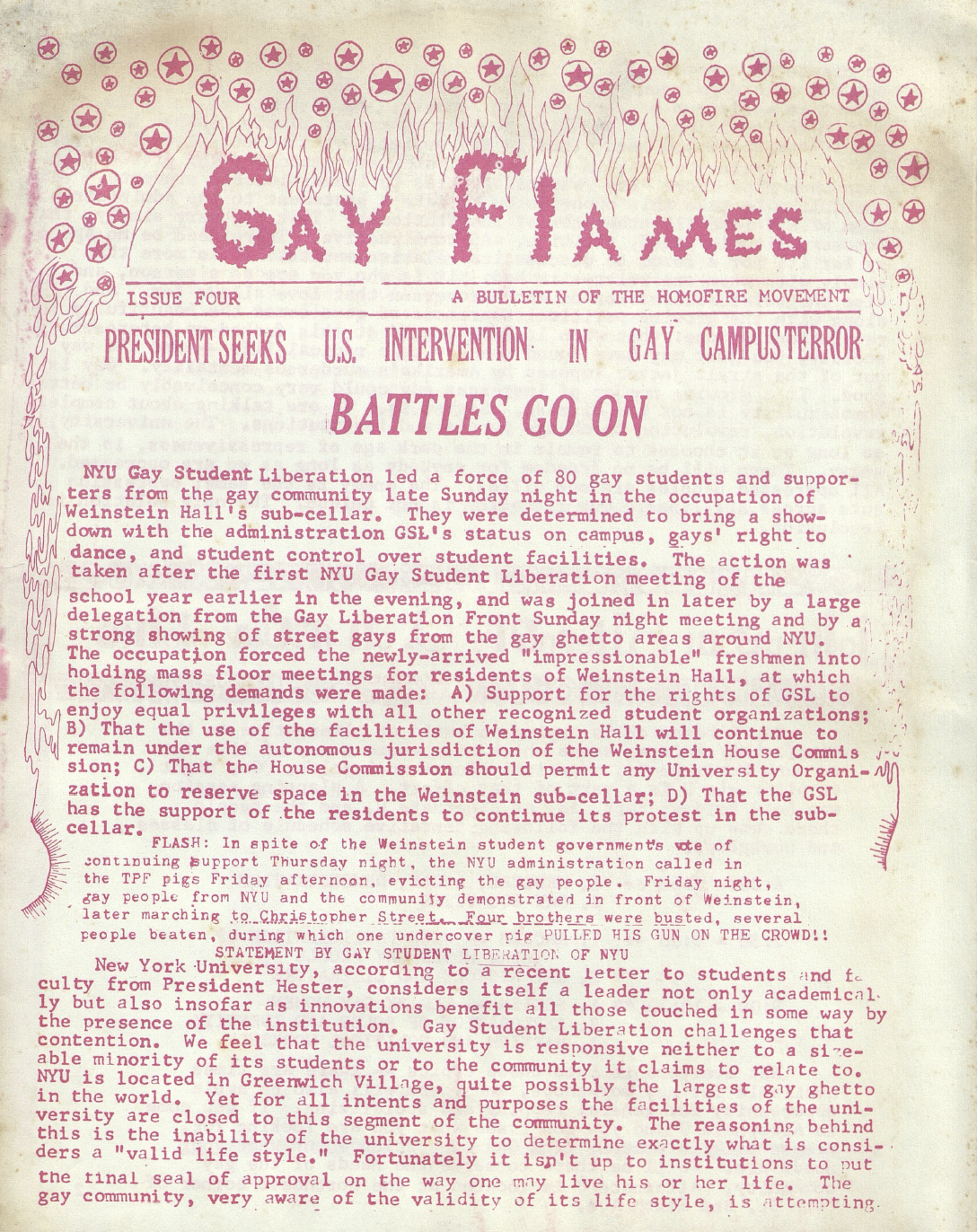
SEPT. 1970: “Battles Go On.” This issue covers demonstrations to hold a gay dance at NYU’s Weinstein Hall. Also: a GLF Bail Fund, a letter from an incarcerated gay man, and penal laws on sodomy. Includes a calendar of gay NYC gatherings.
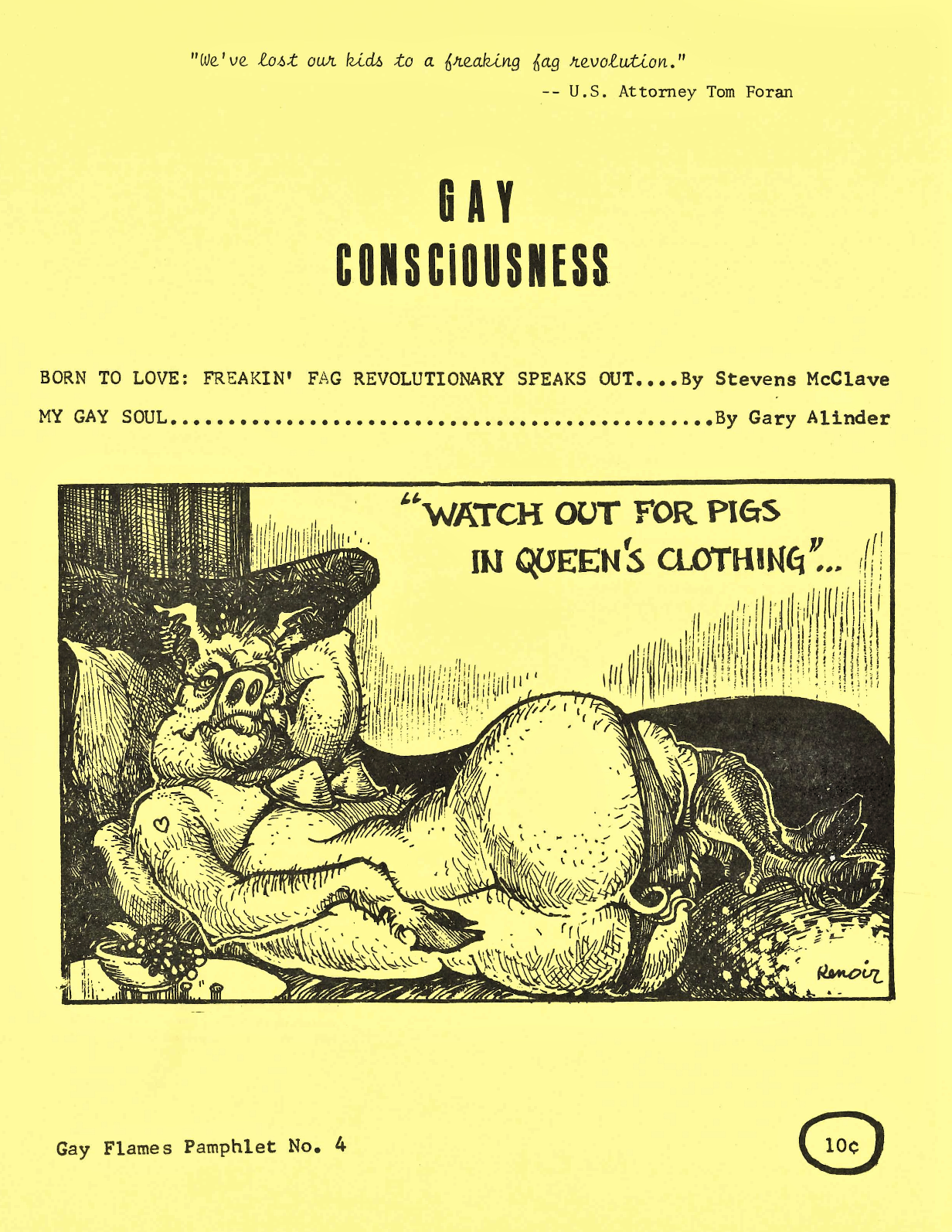
FALL 1970: “Gay Consciousness.” This alternate #4 issue includes, “Born to Love: A Freaking Fag Revolutionary Speaks Out,” by Stevens McClave of San Francisco, and, “My Gay Soul,” by Gary Alinder of San Francisco.
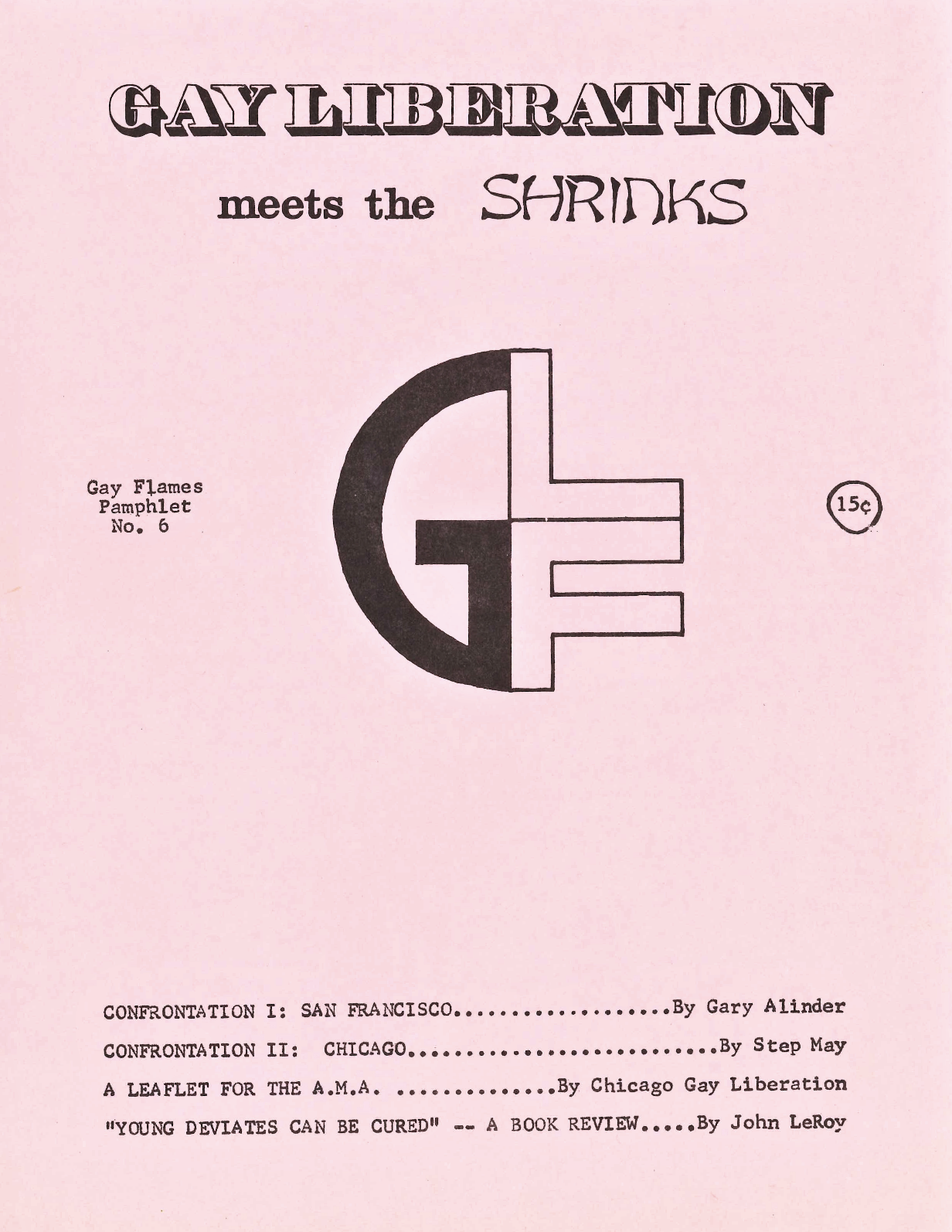
FALL 1970: “Gay Liberation Meets the Shrinks” covers activist actions at the National Convention of the American Psychiatric Association, which were influential in the APA’s 1973 decision to stop classifying homosexuality as a mental disorder. Includes San Francisco coverage by Gary Alinder, Chicago coverage by Step May, and a leaflet.
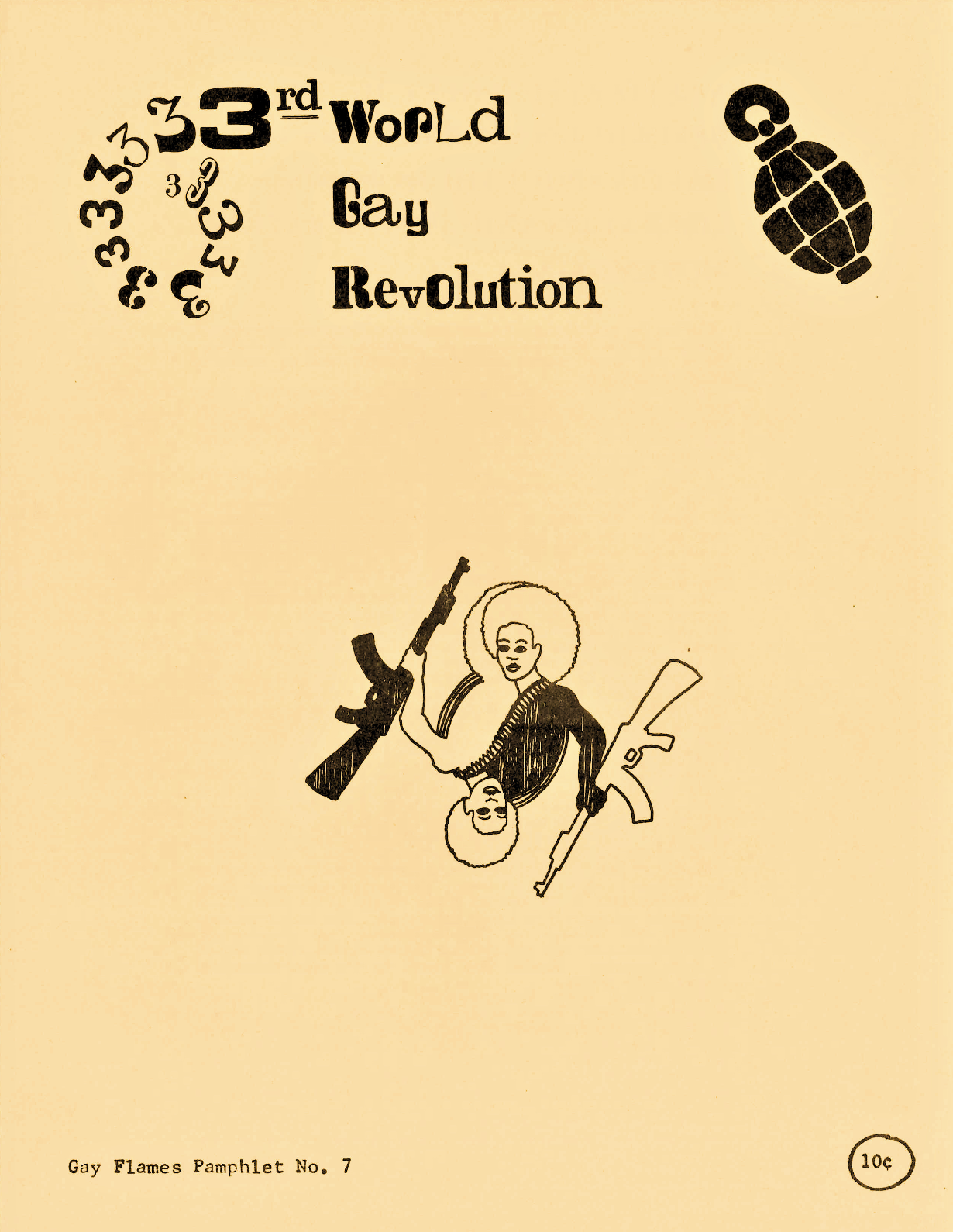
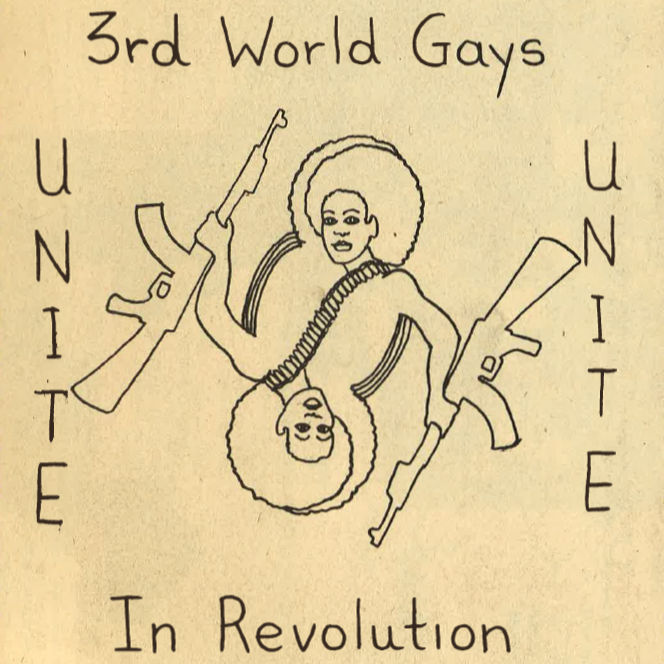
FALL 1970: “Third World Gay Revolution” addresses the need to overcome prejudices and build solidarity between movements of advocacy. Includes: A Letter from Huey P. Newton, Black Panther Party; and “The Oppressed Shall Not Become the Oppressor,” in English and Spanish.
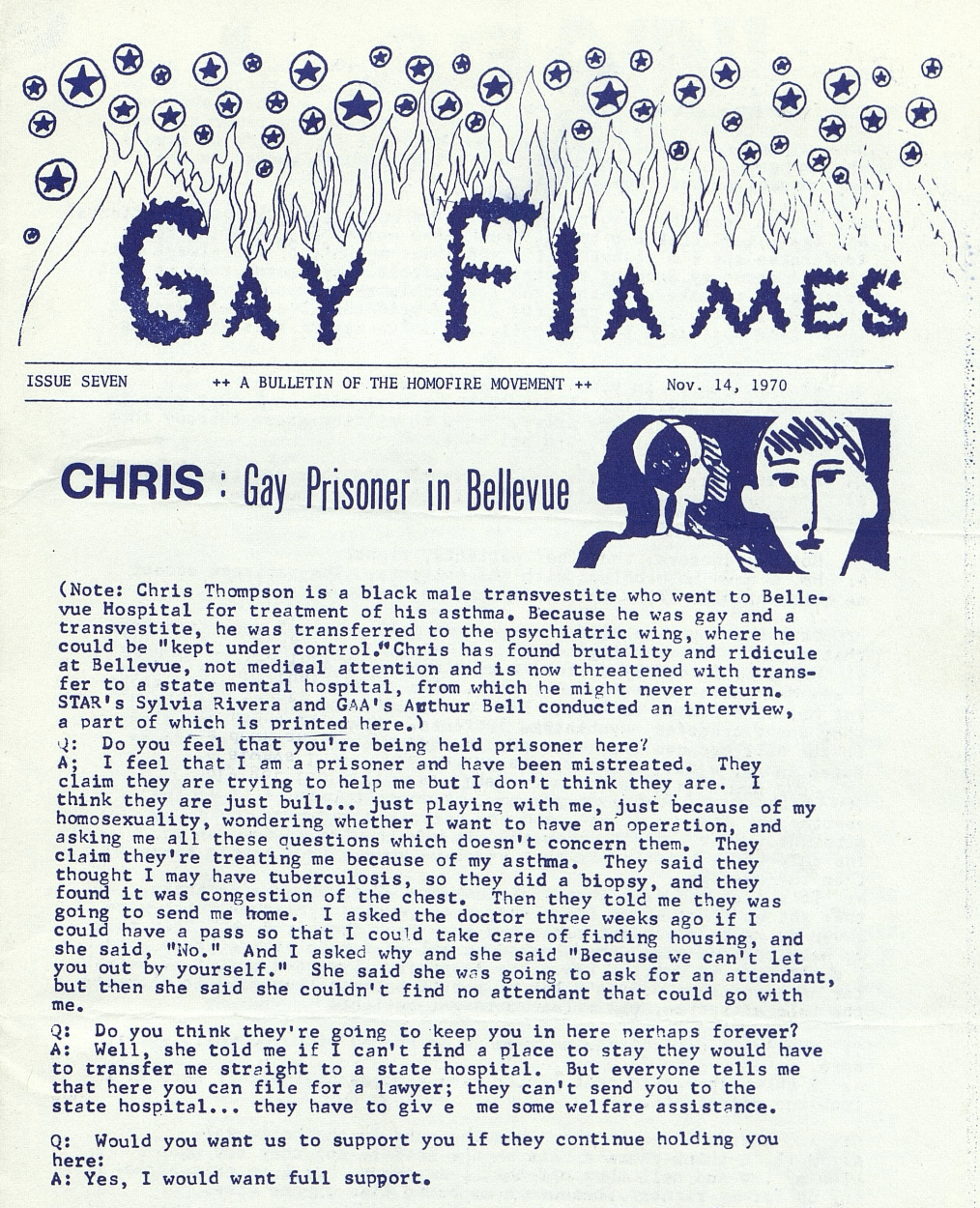
NOVEMBER 14, 1970: “Chris: Gay Prisoner in Bellevue” includes an interview with Christy Henderson-Jenkins, written by Arthur Bell and Sylvia Rivera. Christy describes her experience of imprisonment and mistreatment in the psychiatric wing of Bellevue Hospital.
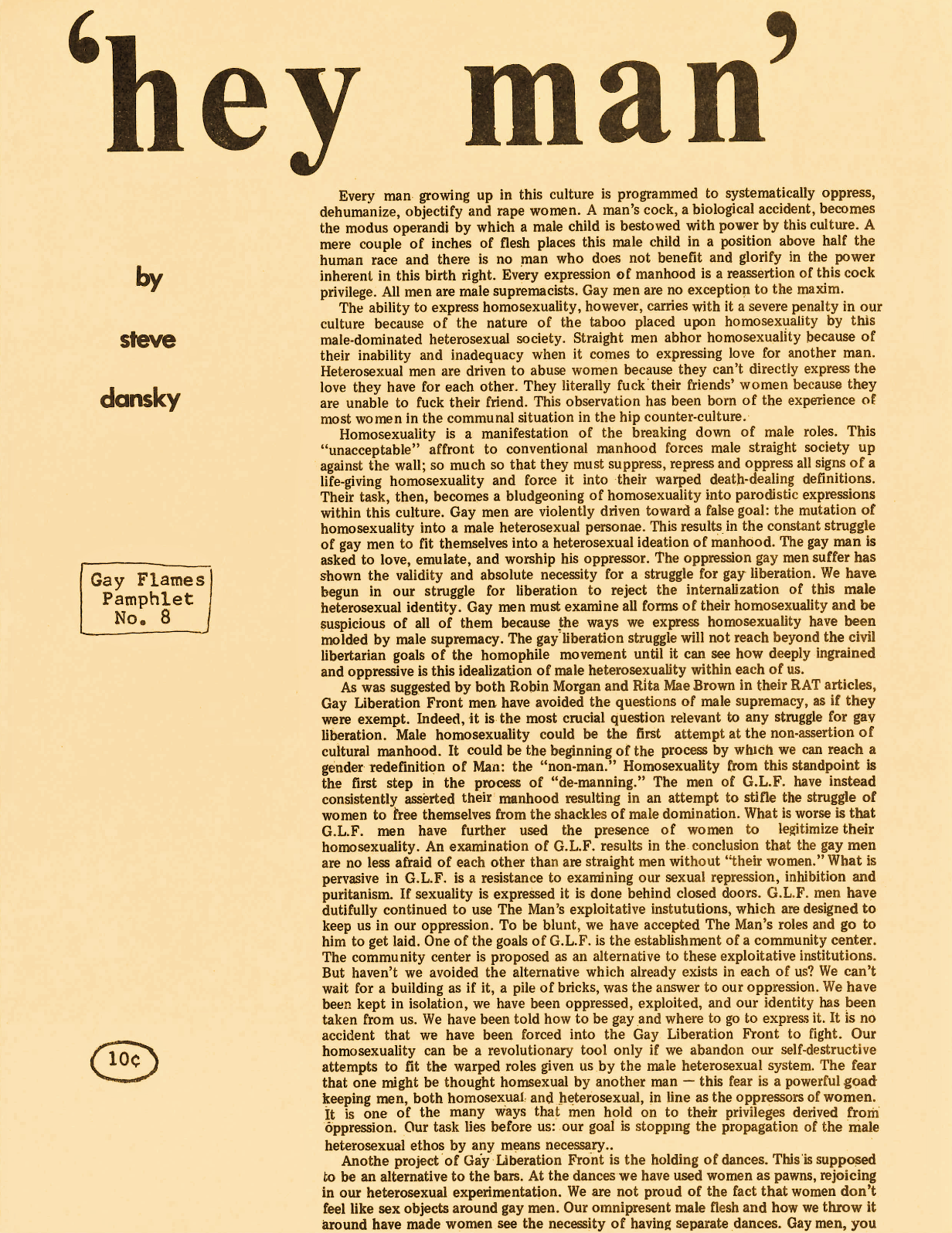
FALL 1970: This issue includes two articles on masculinity: “Hey Man” by Steven Dansky on male supremacy in the larger culture and within the Gay Liberation movement; and “Games Male Chauvinists Play” by Perry Brass on the topic of cruising.
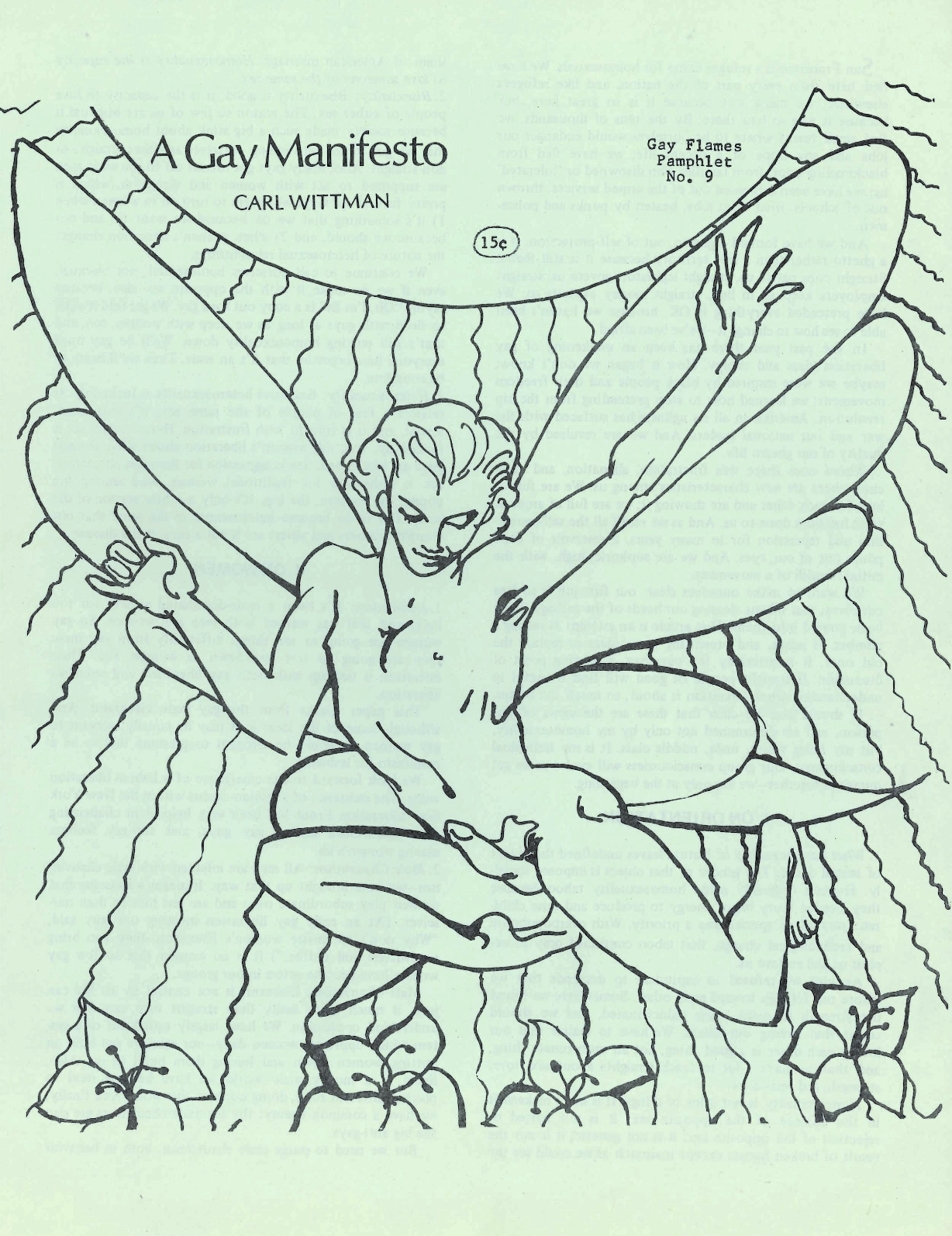
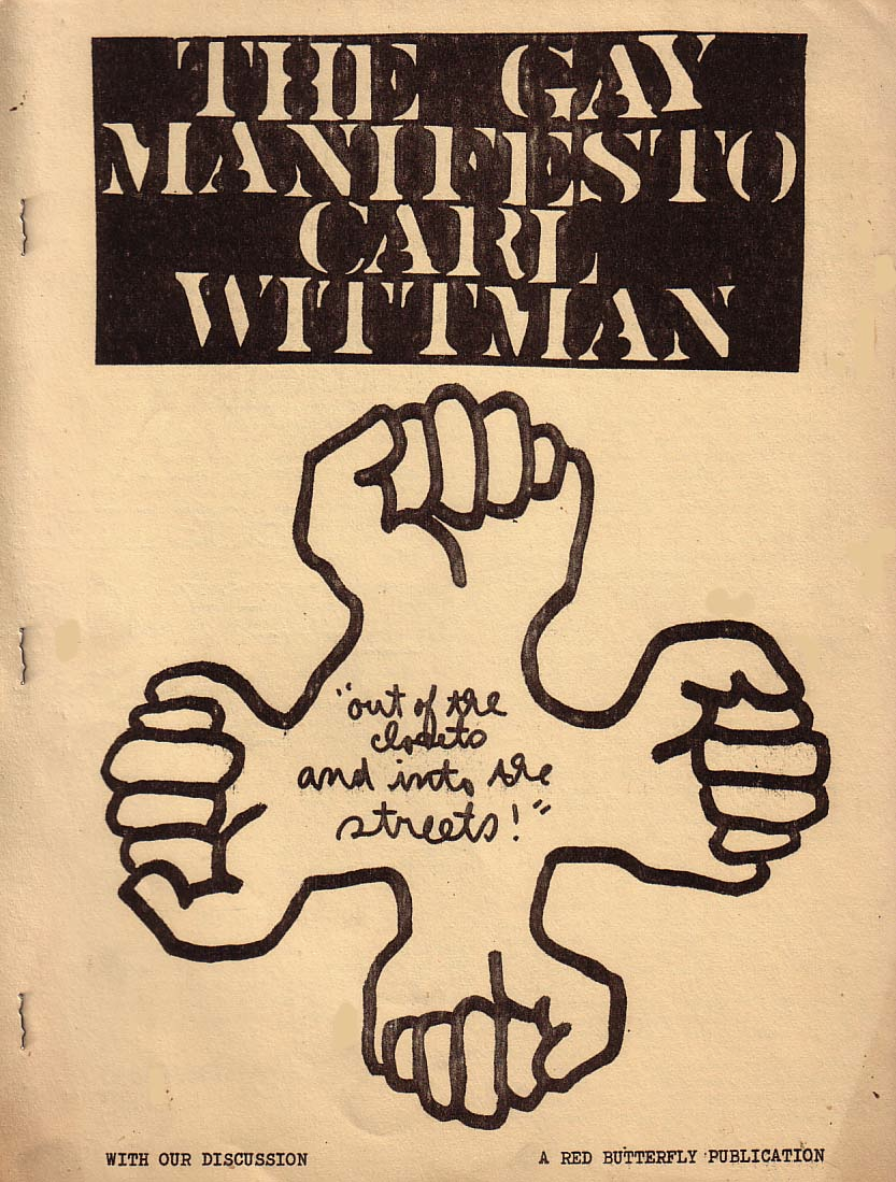
FALL 1970: This issue includes Carl Wittman’s “A Gay Manifesto,” with sections on: Orientation, Women, Roles, Oppression, Sex, Our Ghetto, Coalition. Plus a foldout photo poster for the GLF.
FALL 1970: “My Soul Vanished from Sight - A California Saga of Gay Liberation,” a 16-page, first-person piece by gay liberation activist and journalist Konstantin Berlandt, describing: childhood, adolescence, UC Berkeley, the closet and the gay bar, sexuality, love, heartbreak, protests, confrontations, and monumental thoughts.
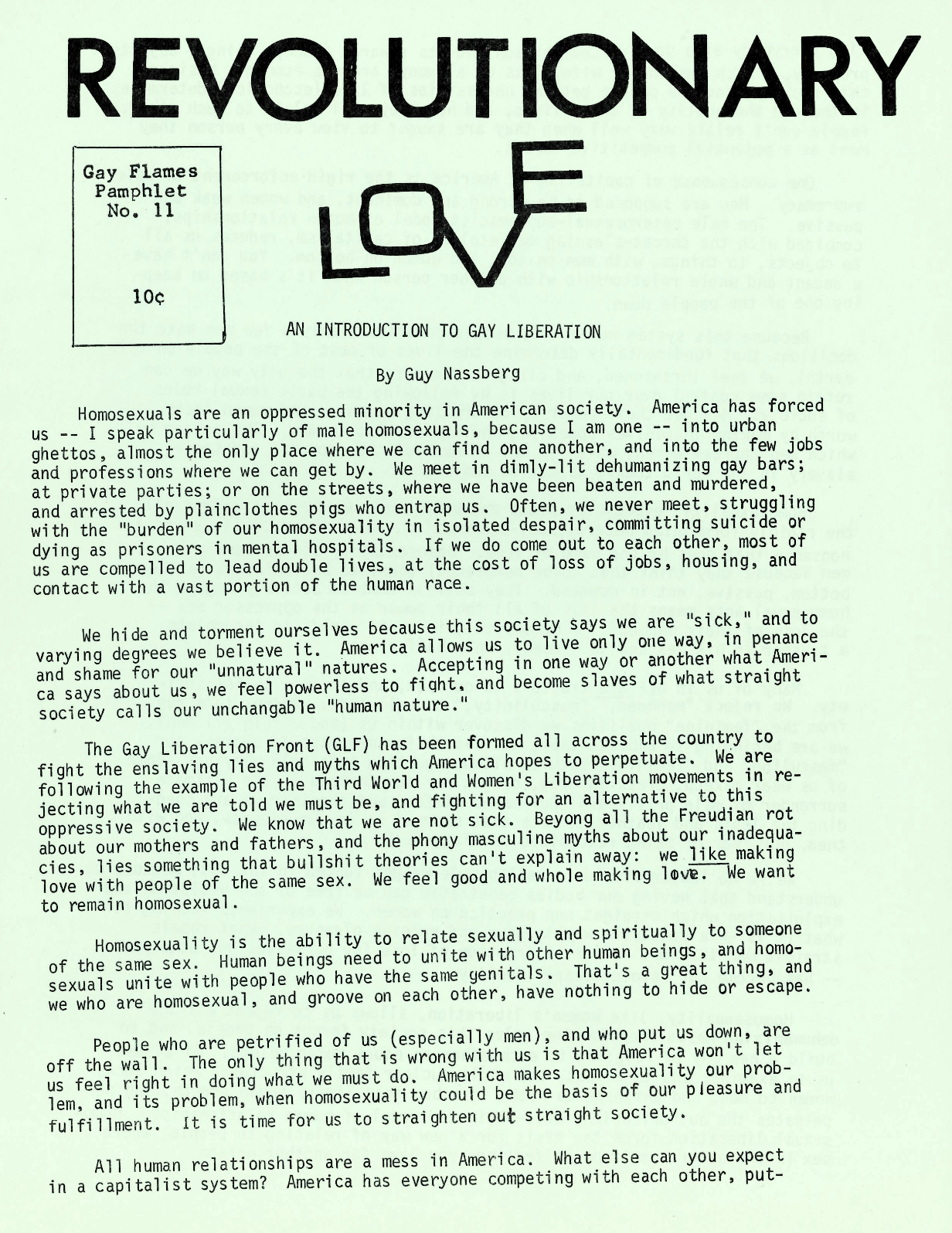
FALL 1970: “Revolutionary Love” issue includes two articles offering critical lenses on societal structures, and suggesting collective alternatives: “An Introduction to Gay Liberation,” by Guy Nassberg; and “On Sex Roles,” by A.N. Diaman.
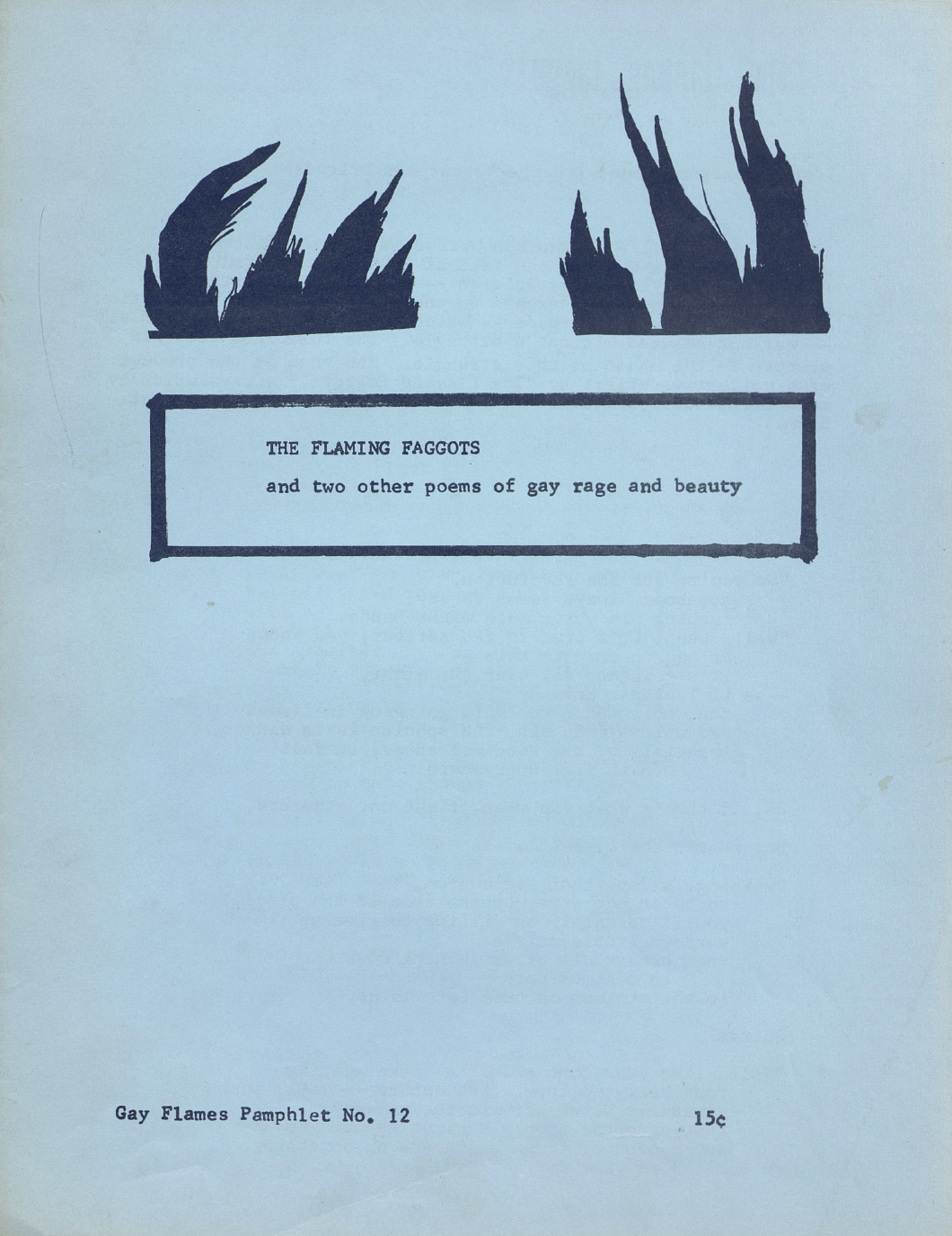
FALL 1970: This issue includes three poems. “The Flaming Faggots,” by a NYC gay male collective who were the first open homosexuals to participate in the Venceremos Brigade in Cuba in 1970. “Phoenix of New Youth,” by Bob Bland. “Bring the Beautiful Boys Home,” by Konstantin Berlandt.
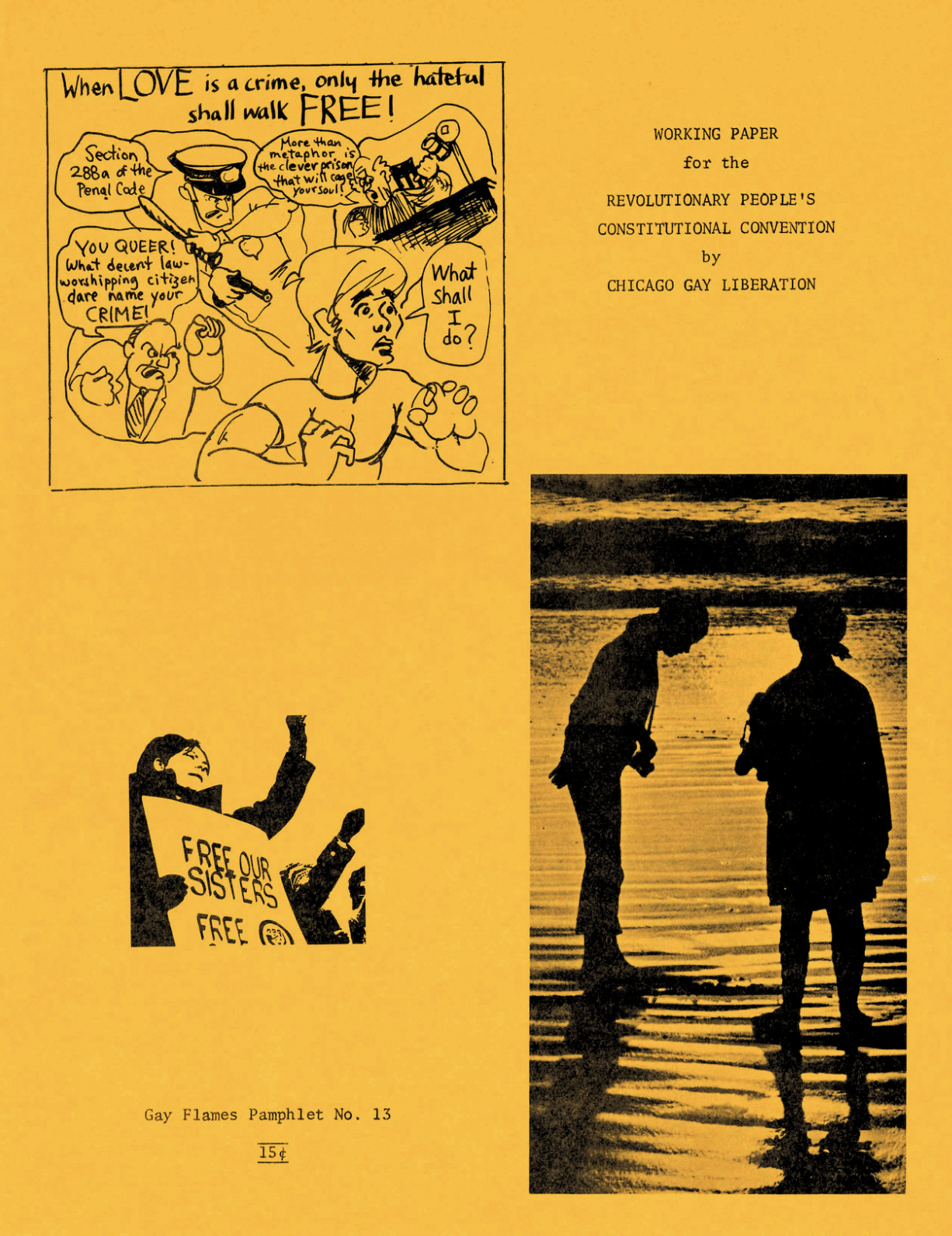
FALL 1970: “Working Paper for the Revolutionary People’s Constitutional Convention by Chicago Gay Liberation” includes a clearly outlined statement on “Grievances Common to All Homosexuals,” including: Economic, Political, Social Institutions, Law and the State, Housing, Education, Medical Care, Culture, Class Status, Sexual Capitalism, Social Attitudes, Psychological Attitudes.
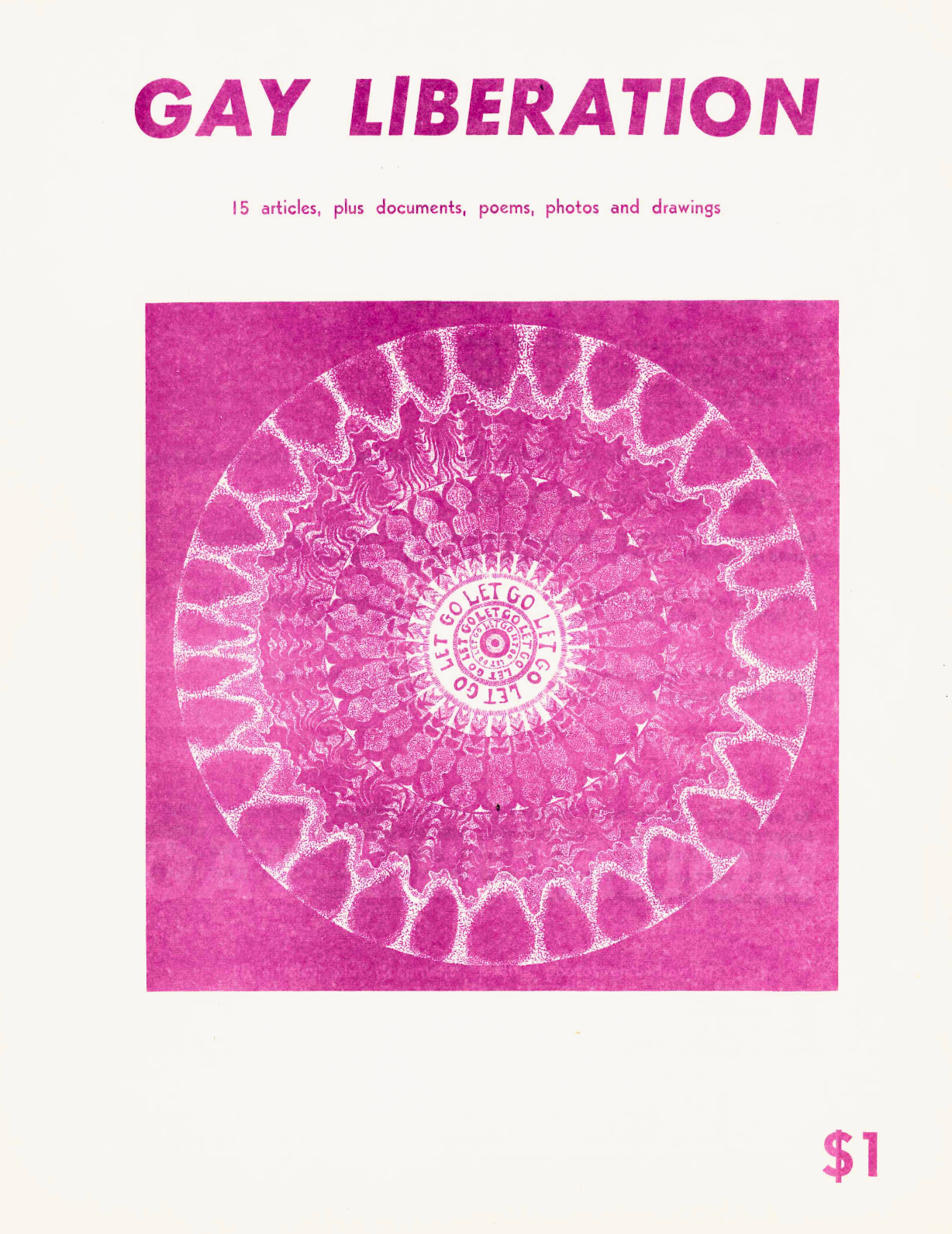
Gay Flames was a weekly pamphlet series written by a group of gay men in GLF. A packet compiling 15 articles was available for sale. Here is the packet cover and the poster included with that packet. This download does not include the 15 articles themselves.
Manifestos
Street Transvestite Action Revolutionaries founded by Sylvia Rivera, Nova, and Marsha P. Johnson
Red Butterfly was a cell within GLF that focused on a Marxist analysis of LGBT oppression and linked it to other movements for social change. This manifesto written by Carl Wittman is one of 4 mimeographed pamphlets they printed.
Flyers
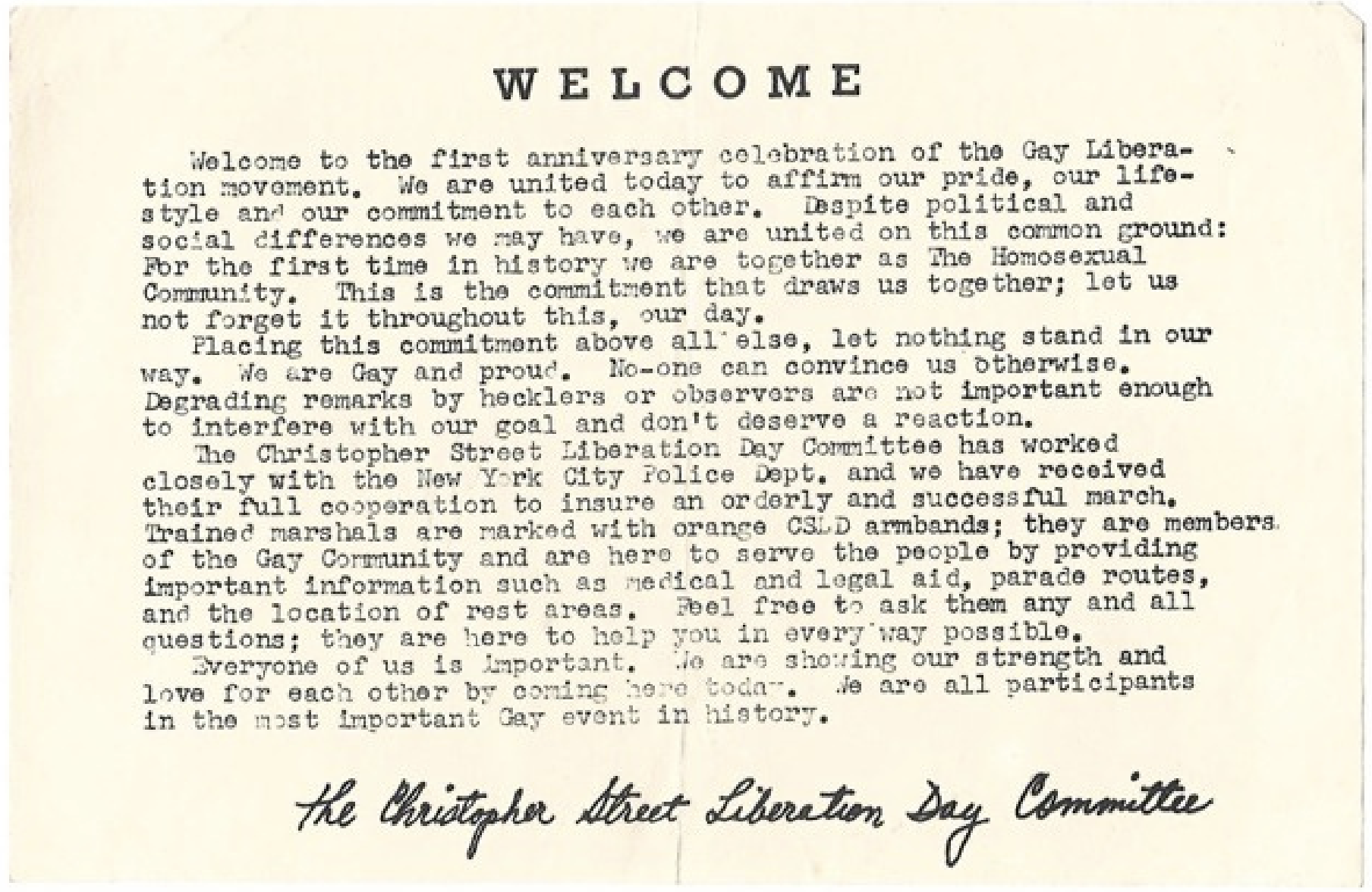
Christopher Street Liberation Day, the predecessor to the Gay Pride March, occurred in New York City on Sunday, June 28, 1970 to mark the 1 year anniversary of the Stonewall Riots. This leaflet was handed out to people as they lined up to march from the Village up to Central Park.
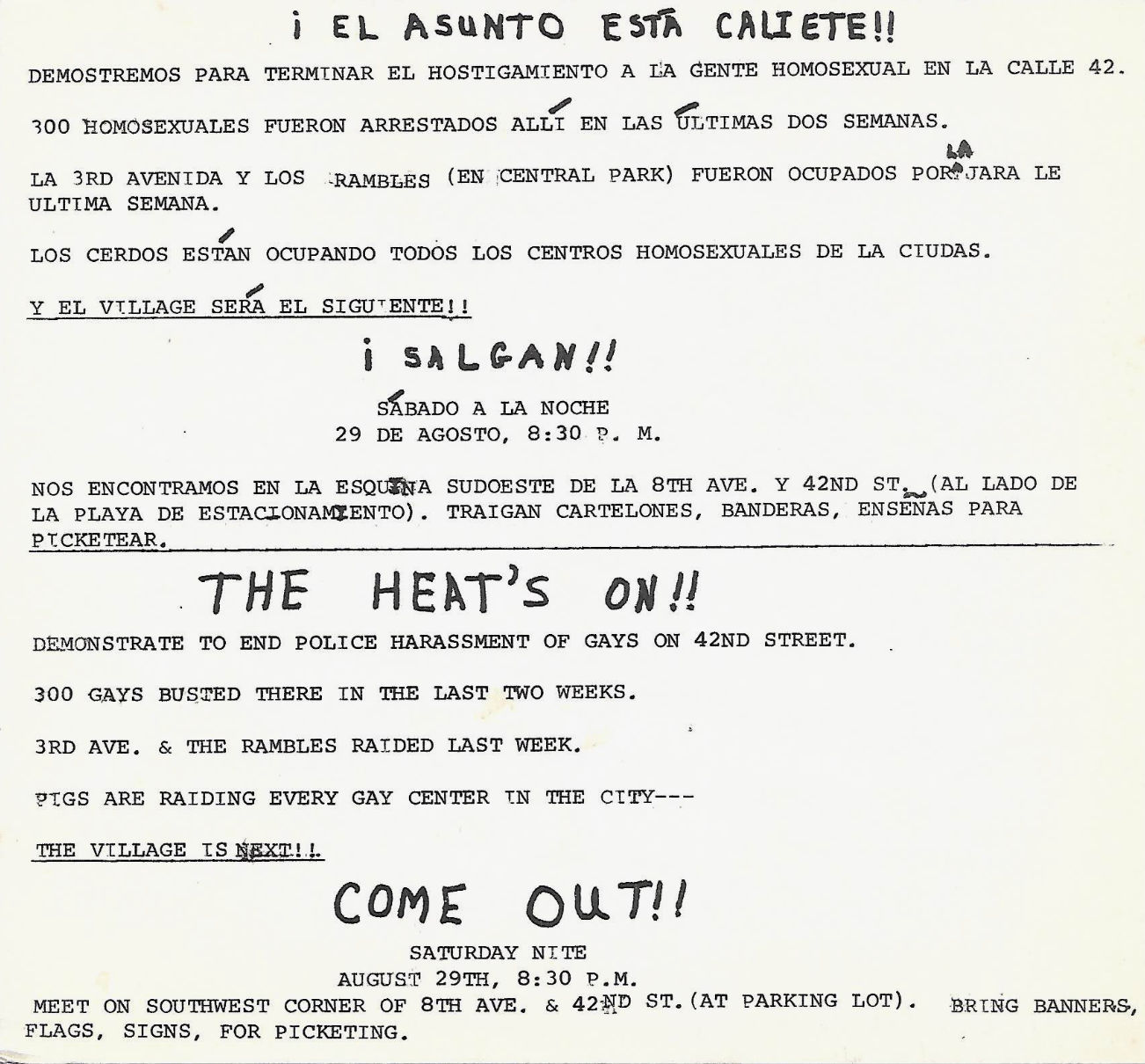
GLF members joined with other gay activist groups in a large, organized march from 42nd Street down to the West Village, called to protest an ongoing, anti-gay police crackdown in Times Square. Read what happened at this demonstration in the Timeline and in Gay Flames, Issue #1.
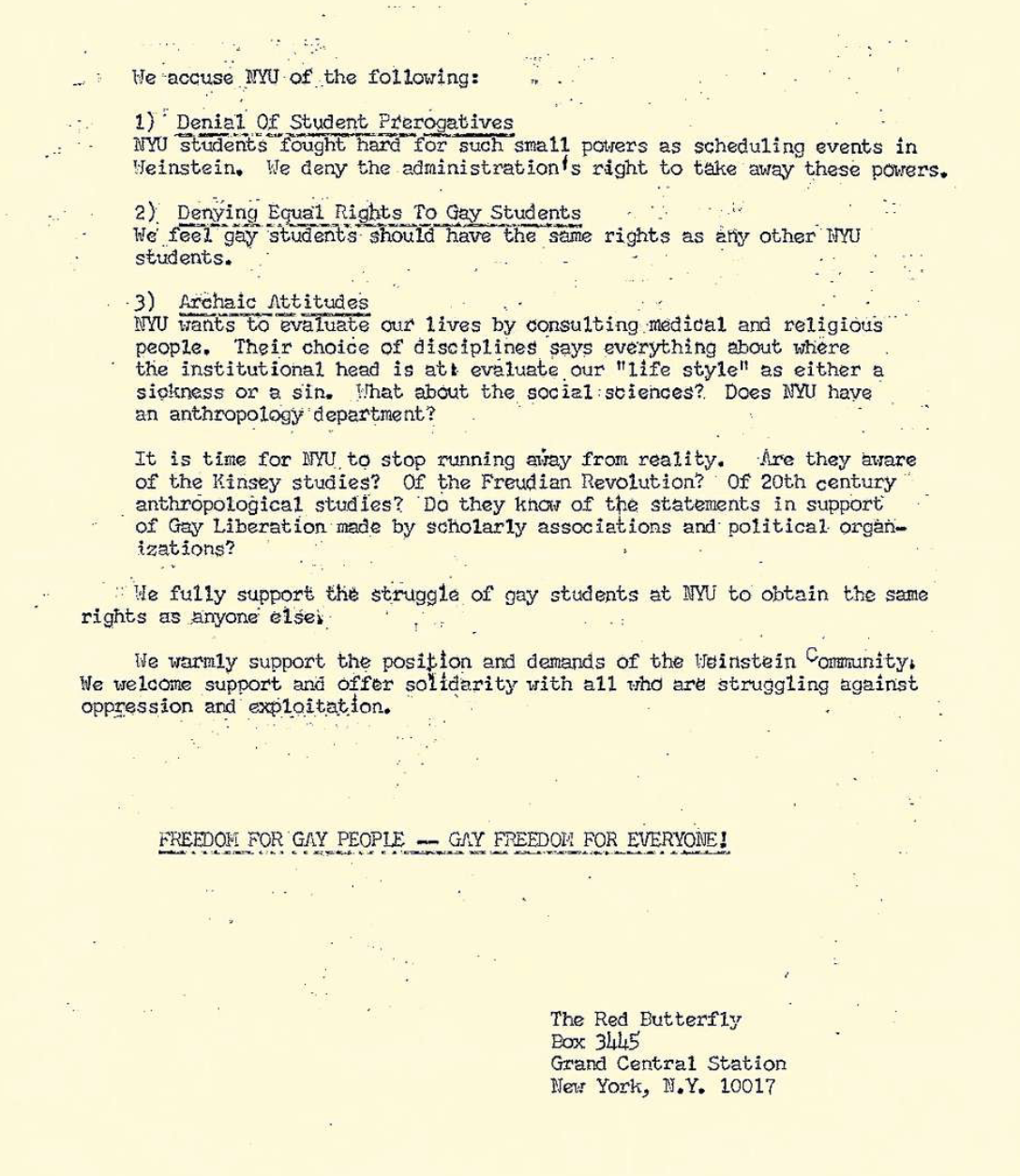
GLF joined members of NYU’s gay and lesbian student group, Gay Student Liberation, and other LGBTQ activists to occupy the basement of the Weinstein Hall dorm at NYU for five days to protest NYU’s ban on proposed gay student dances. Marsha P. Johnson, Sylvia Rivera and others founded STAR, Street Transvestite Action Revolutionaries, during this protest.
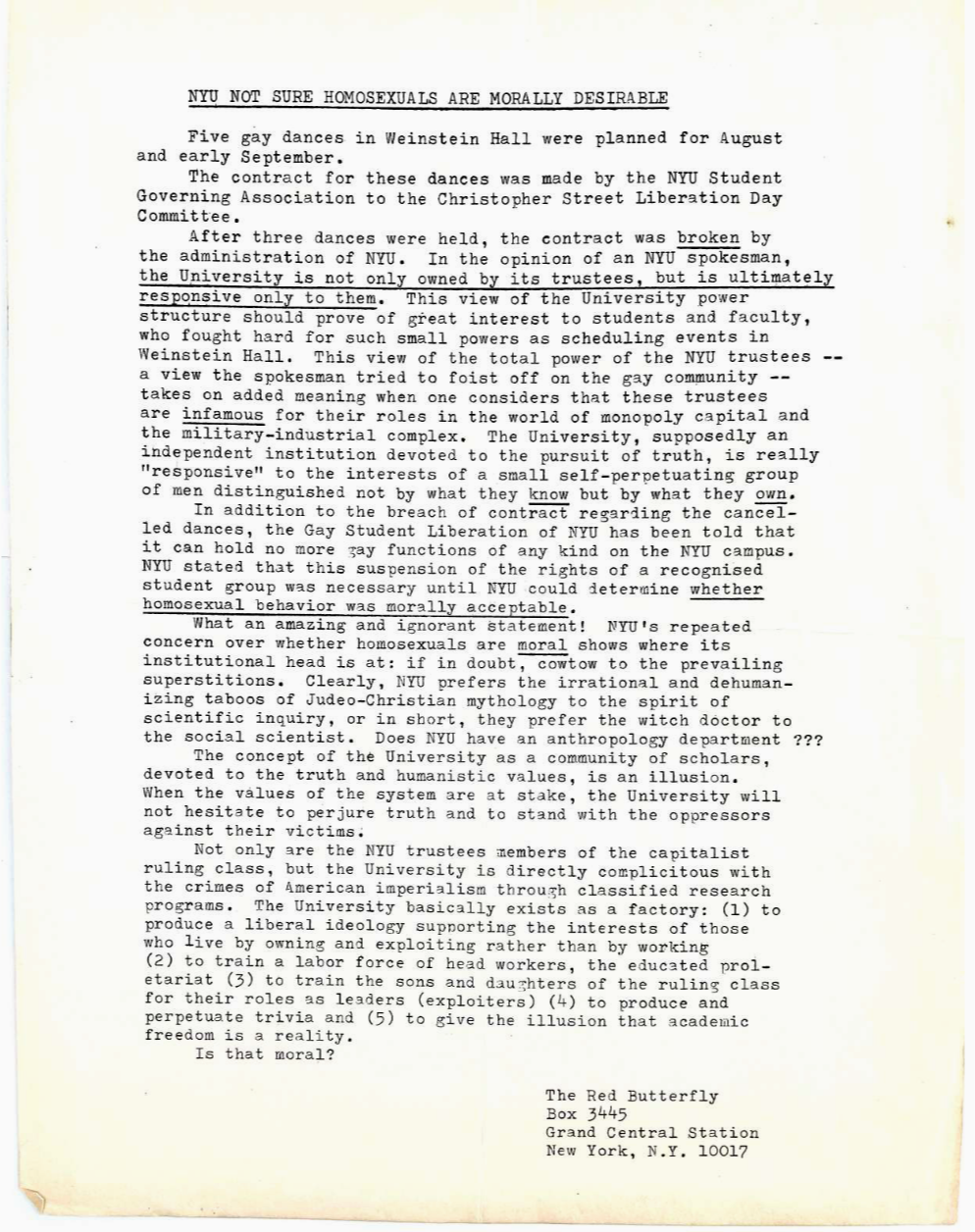
Red Butterfly was a cell within GLF that focused on a Marxist analysis of LGBTQ oppression and linked it to other movements for social change. Here they respond to NYU’s decision to cancel gay dances planned for Weinstein Hall.
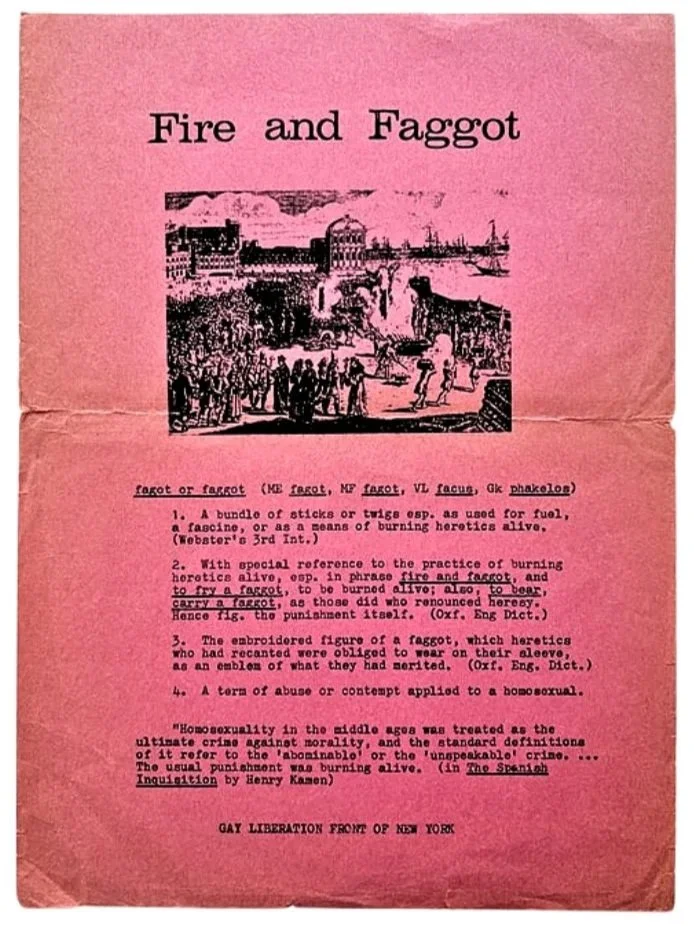
A flyer by GLF describing the origins of the word, “faggot,” and its connection to the punitive practice of burning homosexuals alive.
Miscellaneous
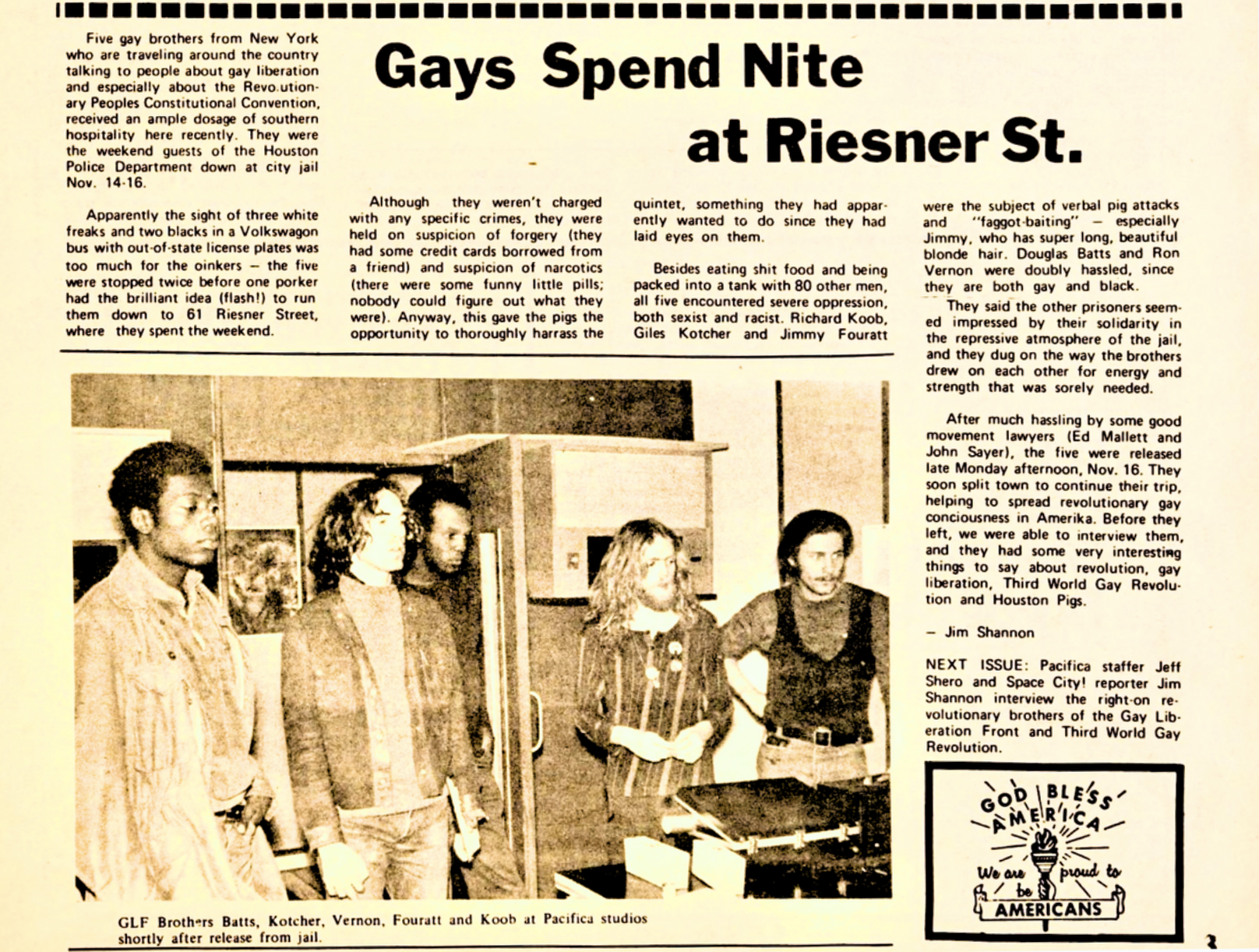
GLF members traveled the country to light the fire of Gay Liberation and inspire other activists. In Houston, 5 GLF members were arrested on bogus charges and the story was covered in the local alternative press.
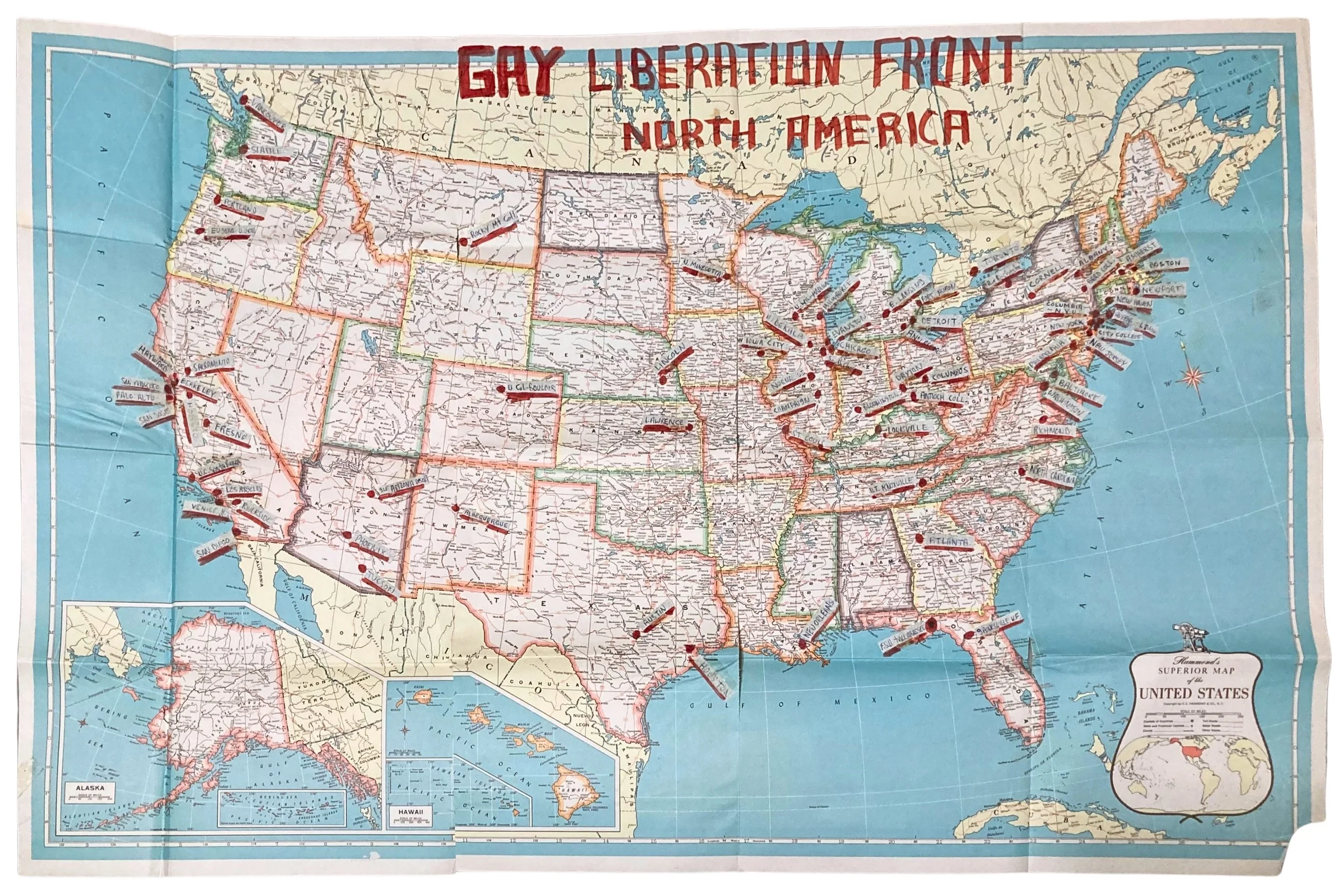
The Gay Liberation Front of New York inspired the formation of chapters across North America.