
What Made GLF Different?
5 Facts About the Gay Liberation Front
In the months following the Stonewall uprising of June 1969, the Gay Liberation Front emerged as a radically new form of political organization. Drawing inspiration from the social movements of the era, GLF helped transform LGBTQ activism in ways that still shape the movement today.
In only a few short years (1969–1972), the Gay Liberation Front transformed a scattered and largely invisible minority into a movement capable of changing the culture and politics of an entire country.
Keep Reading for 5 Facts About GLF…
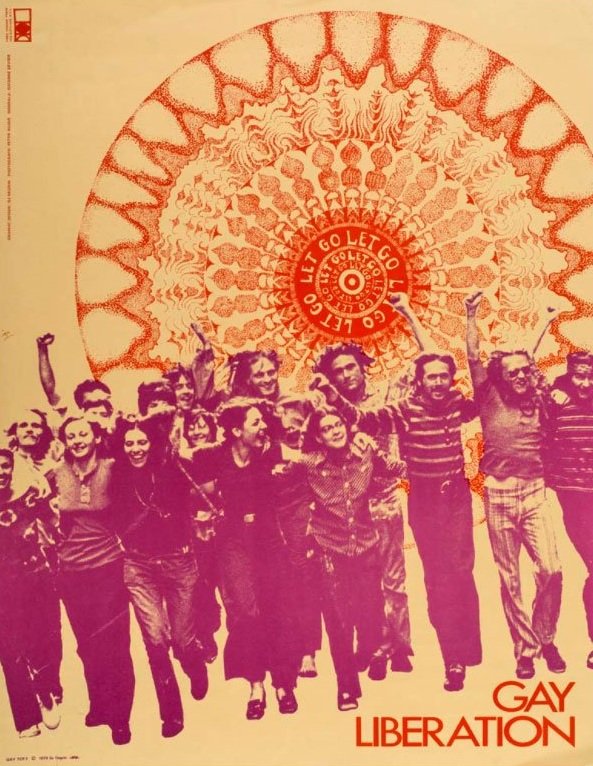

Several key characteristics distinguished GLF from earlier homophile organizations:
1. GLF Changed the Nature of the LGBTQ Rights Movement
Earlier homophile organizations had taken courageous steps in an era of intense repression. Groups such as the Mattachine Society and the Daughters of Bilitis operated in a society where homosexuality was widely criminalized and openly identifying as gay could cost someone their job, family, or safety. Understandably, their strategy was often cautious and reformist, asking for acceptance and legal tolerance.
GLF introduced a dramatically different approach. Inspired by the broader liberation movements of the era, its members embraced public confrontation and mass visibility. Rather than asking quietly for tolerance, they demanded freedom. The movement’s most famous slogan—“Out of the Closets and Into the Streets!”—captured this shift.
-
The Gay Liberation Front fundamentally transformed the direction of LGBTQ activism in the United States. Formed in New York City in the weeks following the June 1969 Stonewall uprising, GLF emerged at a moment when the political climate of the late 1960s—shaped by the civil rights movement, feminism, and the anti-war movement—was redefining how social movements organized and fought for change.
Earlier homophile organizations had taken courageous steps in an era of intense repression. Groups such as the Mattachine Society and the Daughters of Bilitis operated in a society where homosexuality was widely criminalized and openly identifying as gay could cost someone their job, family, or safety. Understandably, their strategy was often cautious and reformist, asking for acceptance and legal tolerance.
-
GLF introduced a dramatically different approach. Inspired by the broader liberation movements of the era, its members embraced public confrontation and mass visibility. Rather than asking quietly for tolerance, they demanded freedom. The movement’s most famous slogan—“Out of the Closets and Into the Streets!”—captured this shift. Coming out was no longer only a personal act but a political one, a way of building collective power in the struggle against oppression.
GLF activists organized demonstrations, disruptions, and public protests targeting institutions that enforced discrimination against gay and lesbian people—government agencies, religious authorities, psychiatric institutions, and the media. Their actions helped move LGBTQ issues into national public debate and sent a powerful message to young and closeted people across the country: “You are not alone.”
-
Drawing inspiration from feminist thought, GLF also helped introduce new ways of thinking about sexuality and gender. Activists challenged rigid gender roles and identified male supremacy as a central force shaping the oppression of LGBT people. These discussions pushed the movement beyond simple demands for tolerance toward a broader critique of social power.
-
GLF also played a central role in organizing the first anniversary demonstration of the Stonewall uprising. The idea for what became the Christopher Street Gay Liberation Day March originated with Gay Liberation Front member Ellen Broidy and Craig Rodwell, owner of New York’s Oscar Wilde Bookshop. Together they drafted a proposal to commemorate the uprising with a public protest march in New York City. Broidy presented the resolution at the 1969 Eastern Regional Conference of Homophile Organizations (ERCHO) in Philadelphia, where it was adopted. One year after Stonewall, the march took place on June 28, 1970, drawing an estimated 5,000 to 15,000 participants—the largest public gathering of lesbian and gay people in the world up to that time. Similar marches soon spread to cities across the United States.
The impact was immediate and far-reaching. Within two years of Stonewall, hundreds of new gay liberation organizations appeared in cities and on college campuses across the country. Thousands of people who had previously lived in isolation began identifying openly as gay or lesbian and participating in the emerging movement.
-
Out of this surge of activism emerged something that had scarcely existed before in visible form: a broad and self-aware gay community. LGBTQ people increasingly recognized shared neighborhoods, cultural spaces, and political interests. In the decade that followed, they created bookstores, newspapers, businesses, sports leagues, choruses, and political organizations that gave institutional shape to this new public life.
In this way, the Gay Liberation Front helped catalyze the emergence of the modern LGBTQ community—not by creating it alone, but by igniting the political energy and visibility that allowed it to grow. The networks and institutions that developed in the 1970s would later prove essential when the AIDS crisis demanded organized community response in the 1980s.
2. Intersectionality Was a Core Organizing Principle of GLF
GLF actively sought alliances with other movements fighting oppression. Its members participated in anti-war demonstrations, supported feminist organizing, and built relationships with groups such as the Black Panthers and the Young Lords. These collaborations reflected the belief that systems of oppression were interconnected and that movements for liberation could be stronger when they acted in solidarity with one another.
-
From its beginning, the Gay Liberation Front understood the struggle for gay liberation as part of a broader movement for social and economic justice. Many of the organization’s founders and early members came to GLF after participating in other movements of the 1960s—including the civil rights movement, feminism, and the anti–Vietnam War movement—and they continued to see their work for gay liberation as connected to those struggles.
As a result, GLF actively sought alliances with other movements fighting oppression. Its members participated in anti-war demonstrations, supported feminist organizing, and built relationships with groups such as the Black Panthers and the Young Lords. These collaborations reflected the belief that systems of oppression were interconnected and that movements for liberation could be stronger when they acted in solidarity with one another.
-
At the time, this approach was controversial. Some critics argued that LGBTQ activism should focus narrowly on issues affecting gay people alone. GLF rejected that view. Instead, it insisted that the fight for sexual freedom could not be separated from struggles against racism, sexism, economic inequality, and war. Ultimately, support for the Black Panthers was one of the reasons that a group of members left to found the Gay Activists Alliance, which made gay rights its sole focus. It should be noted though, there were many members of GLF who were also GAA members, understanding that there was a place for both approaches.
-
Today, the concept widely known as intersectionality echoes the same principle that guided GLF more than fifty years ago: that movements for justice are most powerful when they recognize the connections between them. In this sense, the organizing philosophy of the Gay Liberation Front anticipated an approach that has once again become central to contemporary LGBTQ activism.
3. GLF Functioned as an Umbrella Organization
From its inception, the Gay Liberation Front understood itself as a broad coalition. Within this structure, a number of more specialized organizing groups formed as working groups or cells within the broader GLF milieu. These included Gay Youth, Radicalesbians, Gay Women’s Liberation, Street Transvestite Action Revolutionaries (STAR), Third World Gay Revolution, the Gay Revolutionary Party, and the Effeminists, among others. Some of these groups later became independent organizations. Each brought focus to specific communities or strategies while remaining connected to the larger liberationist vision that GLF had helped ignite.
-
From its inception, the Gay Liberation Front understood itself as a broad coalition. The word Front signaled that GLF was not a single-issue organization but a gathering place for many different constituencies within the emerging movement for gay liberation following the Stonewall Rebellion. Rather than operating as a tightly centralized group, GLF functioned as a network in which people organized around particular needs, identities, and political priorities.
-
Within this structure, a number of more specialized organizing groups formed as working groups or cells within the broader GLF milieu. These included Gay Youth, Radicalesbians, Gay Women’s Liberation, Street Transvestite Action Revolutionaries (STAR), Third World Gay Revolution, the Gay Revolutionary Party, and the Effeminists, among others. Some of these groups later became independent organizations. Each brought focus to specific communities or strategies while remaining connected to the larger liberationist vision that GLF had helped ignite.
-
What sometimes appeared at the time as factional breakaways can also be understood as the organic development of a movement that was intentionally pluralistic. The formation of these groups reflected the diversity within the original Gay Liberation Front and demonstrated how its organizing model encouraged communities to articulate their own voices while contributing to the broader struggle for LGBTQ liberation.
4. GLF Began as a Non-Hierarchical Organization
From its earliest days, the Gay Liberation Front adopted a deliberately non-hierarchical structure. Reflecting the influence of the radical democratic movements of the late 1960s, GLF rejected traditional leadership models in favor of collective decision-making. Actions were generally discussed and approved at the organization’s large Sunday night meetings, where participants attempted to reach decisions through group consensus rather than through formal leaders or officers.
-
From its earliest days, the Gay Liberation Front adopted a deliberately non-hierarchical structure. Reflecting the influence of the radical democratic movements of the late 1960s, GLF rejected traditional leadership models in favor of collective decision-making. Actions were generally discussed and approved at the organization’s large Sunday night meetings, where participants attempted to reach decisions through group consensus rather than through formal leaders or officers.
This approach reflected an important political principle: GLF believed that a movement seeking liberation should itself model new forms of democratic participation. Leadership responsibilities were therefore shared broadly among members, and individuals who articulated ideas that resonated with the group often emerged as temporary or informal leaders.
-
At the same time, this structure presented challenges. Large meetings could be unpredictable, and discussions were sometimes dominated by the most persistent speakers rather than by clear decision-making processes. Reaching consensus could be slow, and the absence of formal leadership sometimes made coordination difficult.
-
In practice, much of GLF’s work came to be carried out by smaller working groups or action cells that formed around particular projects. These groups organized demonstrations, produced leaflets, published the Come Out! newspaper, and coordinated fundraising events such as the movement’s dance parties. This decentralized structure allowed GLF to act quickly and creatively during the movement’s early years.
Over time, however, the pressures of rapid growth, ideological debates, and the formation of more specialized organizations gradually weakened the central role of GLF itself. Many activists moved into new groups that focused on particular political strategies or identities. While this meant that GLF as a single organization became less cohesive after its first few years, the ideas, organizing methods, and networks it helped create continued to shape the broader gay liberation movement.
5. GLF Members Went on to Seed the LGBTQ Movement
The ideas, organizing methods, and networks first forged within GLF helped seed dozens of organizations and community institutions that continued the struggle for equality and liberation in the decades that followed:
Street Transvestite Action Revolutionaries (STAR)
Radicalesbians
Gay Activists Alliance
Callen-Lorde Community Health Center
Rainbow Book Fair
Philadelphia Gay News (PGN)
-
The average age of Gay Liberation Front members was around twenty-five. As a youth-driven movement emerging from the political upheavals of the late 1960s, GLF was filled with people of extraordinary energy and commitment. Many members devoted themselves almost entirely to movement work—organizing demonstrations, producing newspapers and leaflets, holding meetings, and building alliances with other liberation struggles.
For many, this commitment came at significant personal cost. Some activists had been cut off from their families after coming out. Others supported themselves through low-wage jobs while trying to sustain constant political activity in an expensive city. Some temporarily left college or delayed career plans in order to devote themselves to organizing.
-
After several intense years of activism, however, many GLF members began confronting practical realities. Some returned to school or pursued full-time employment, while others left New York altogether. In the summer of 1971, a notable group of longtime GLF activists relocated to San Francisco, where they helped bring the ideas and organizing spirit of gay liberation to the West Coast.
As GLF evolved and eventually fragmented, many of its members went on to found, lead, or participate in other LGBTQ organizations. Some of these groups emerged directly from GLF networks and debates, while others were created later by activists shaped by their GLF experience.
-
Among the organizations seeded by GLF members were; Street Transvestite Action Revolutionaries (STAR), founded by Sylvia Rivera and Marsha P. Johnson to support homeless transgender youth; and Radicalesbians, co-founded by member Lois Hart and which helped launch lesbian feminism as a political movement. And of course, the Gay Activists Alliance, which was formed by founding GLF members Marty Robinson and Jim Owles, who wanted to focus on legislative reform to advance gay and lesbian rights.
Many activists who first organized in the Gay Liberation Front later helped create the institutions that would sustain LGBTQ communities in the decades that followed. For example, GLF veteran Perry Brass helped build important institutions that became central to LGBTQ life, including organizations such as the Gay Men’s Health Project Clinic, which evolved into the Callen-Lorde Community Health Center. Perry also went on to co-found the Rainbow Book Fair. Considered the largest LGBTQ book fair in the United States, it has become an important annual gathering for LGBTQ writers, publishers, and readers.
Another notable example is the Philadelphia Gay News (PGN), founded in 1976 by Gay Liberation Front activist Mark Segal. Today PGN is now one of the longest-running LGBTQ newspapers in the United States and has received numerous journalism awards.
Member Flavia Rando served on the Executive Board of the Center for LGBTQ Studies (CLAGS) at the City University of New York, where her work helped institutionalize queer studies in academia.
Many activists who first organized in the Gay Liberation Front later moved to different cities and helped establish new liberation organizations across the United States and internationally. She is also the founder of the Lesbian Studies Institute at the Lesbian Herstory Archives.
In this way, the Gay Liberation Front functioned as an incubator for the modern LGBTQ movement. The ideas, organizing methods, and networks first forged within GLF helped seed dozens of organizations and community institutions that continued the struggle for equality and liberation in the decades that followed.
Like this resource?