
Remembering GLF Member Jerry Hoose
Five decades of activism from GLF to SAGE
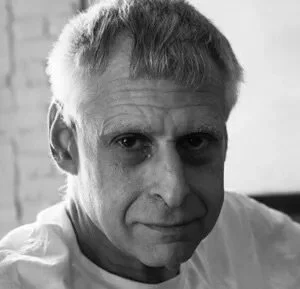
Jerry Hoose (1945–2015) was a Stonewall veteran, Gay Liberation Front activist, and longtime community organizer whose activism spanned nearly five decades. Present at the Stonewall uprising in 1969, he joined the newly formed Gay Liberation Front and became an important figure in the organization's social and fundraising efforts.
Within GLF, Hoose helped organize the celebrated dances held at Alternate U on West 14th Street. Advertised as "Gay Community Dances," these events were among the first openly queer public social gatherings in New York where men and women could attend together without fear of police harassment. Beyond their social significance, the dances generated much-needed revenue for GLF's political organizing and helped create a sense of community outside the Mafia-controlled bar system that dominated gay social life at the time.
Friends and fellow activists remembered Hoose as a skilled organizer who understood that building a movement required more than demonstrations and political meetings. Creating spaces where LGBTQ people could gather openly and safely was itself a form of liberation. “Like so many GLF mambers, Jerry was an activist from birth to death,” said fellow GLF member Mark Segal.
Perry Brass remembers that “Jerry became one of the first marshals of the march, making sure order was kept and that we were not simply disciplined but openly defiant.”
At the first march, Jerry shouted through a megaphone, “Keep your heads up! You’re not in a dark bar anymore, but in the sunshine. We’re gay and we’re proud! Say it now: ‘Gay and Proud! Gay and proud!’”
Hoose remained active long after the first wave of gay liberation. In later years he became involved with SAGE (Services and Advocacy for GLBT Elders), advocating for LGBTQ seniors and helping organize efforts to preserve dedicated elder space at New York's LGBT Community Center. In 2014 he led the successful "Save Our Space" campaign, mobilizing community members to protect the longtime SAGE drop-in room from redevelopment plans.
His life reflected a continuity often overlooked in LGBTQ history: the connection between the radical energy of Stonewall and the ongoing work of building and defending community institutions. From the streets of Greenwich Village in 1969 to elder advocacy more than forty years later, Hoose remained committed to the idea that LGBTQ people deserved not only rights, but community, dignity, and a place of their own.
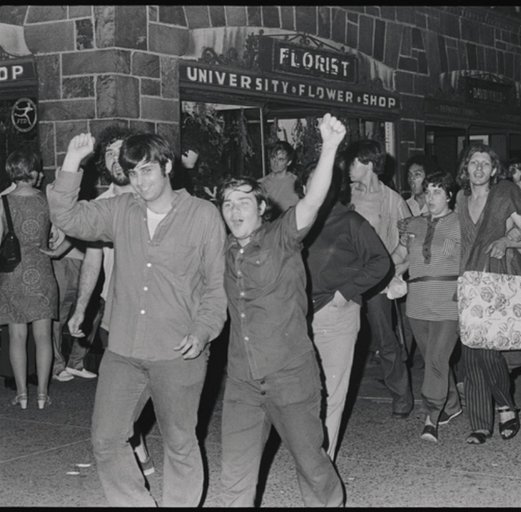
Jerry Hoose and Mark Segal, with raised fists at Weinstein Hall demonstration. Sylvia Rivera on far right.